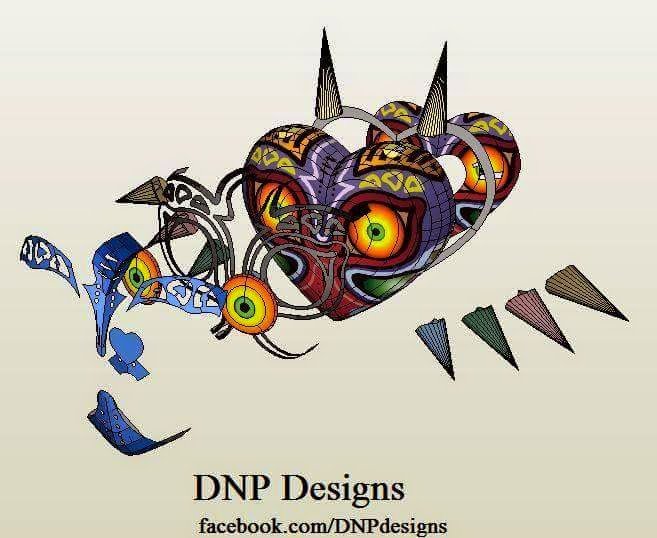
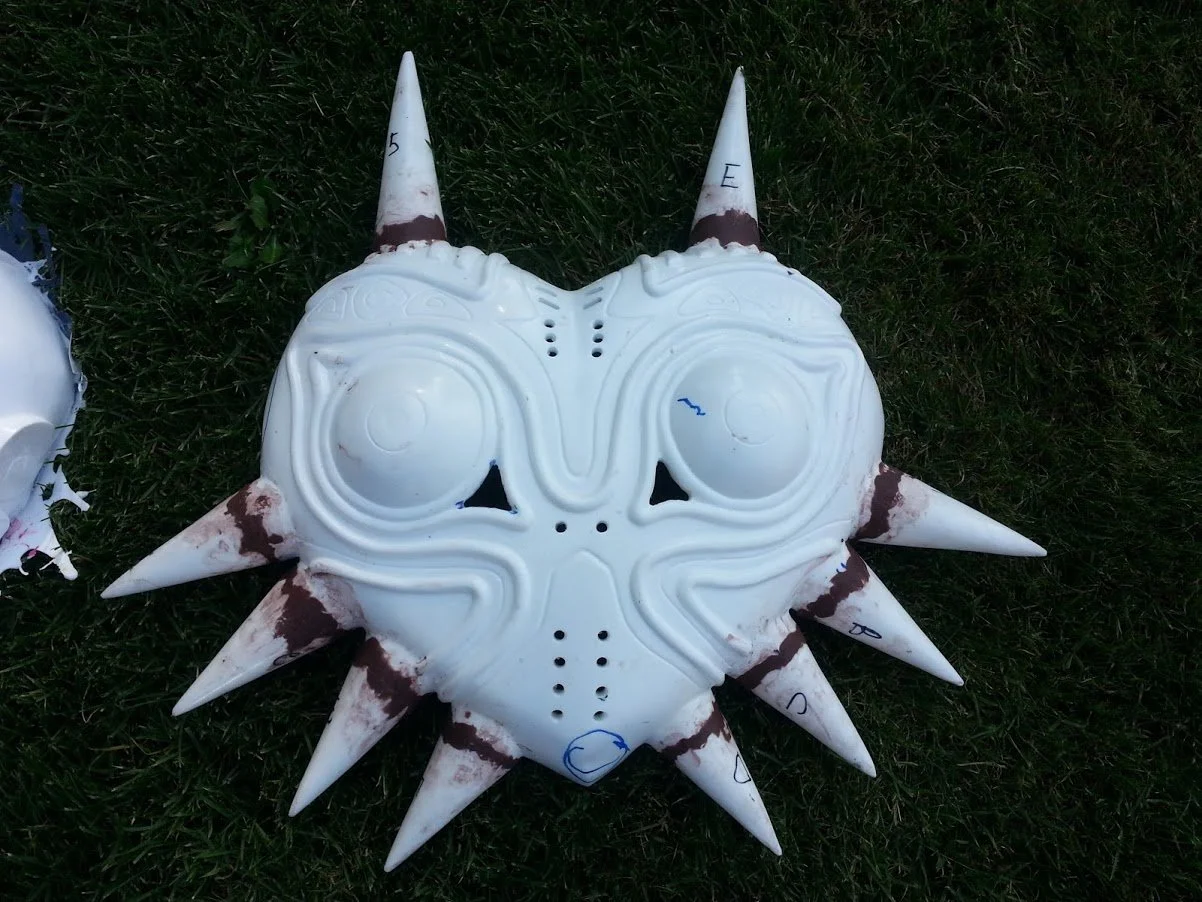
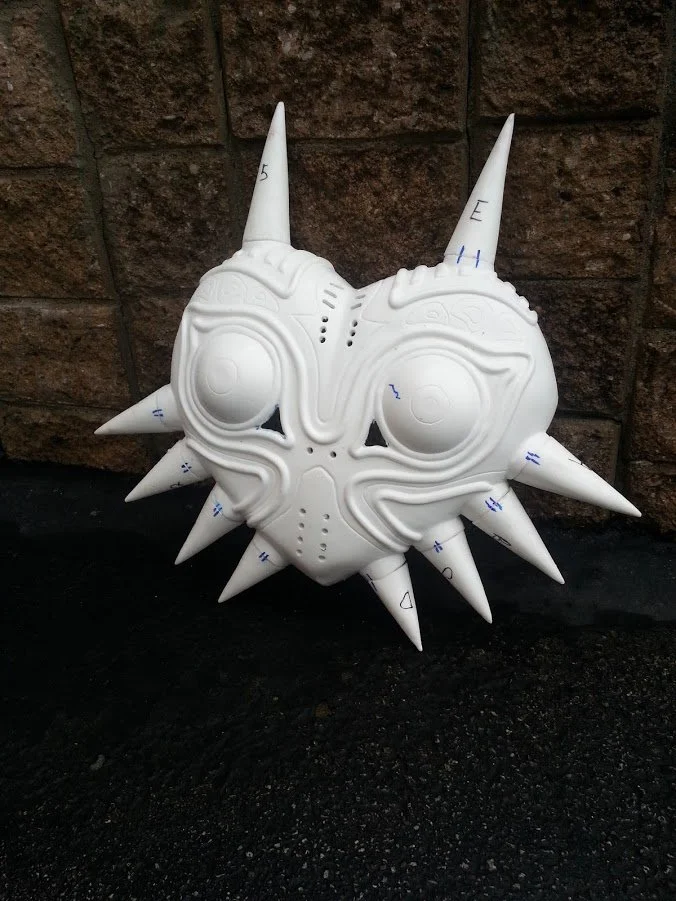
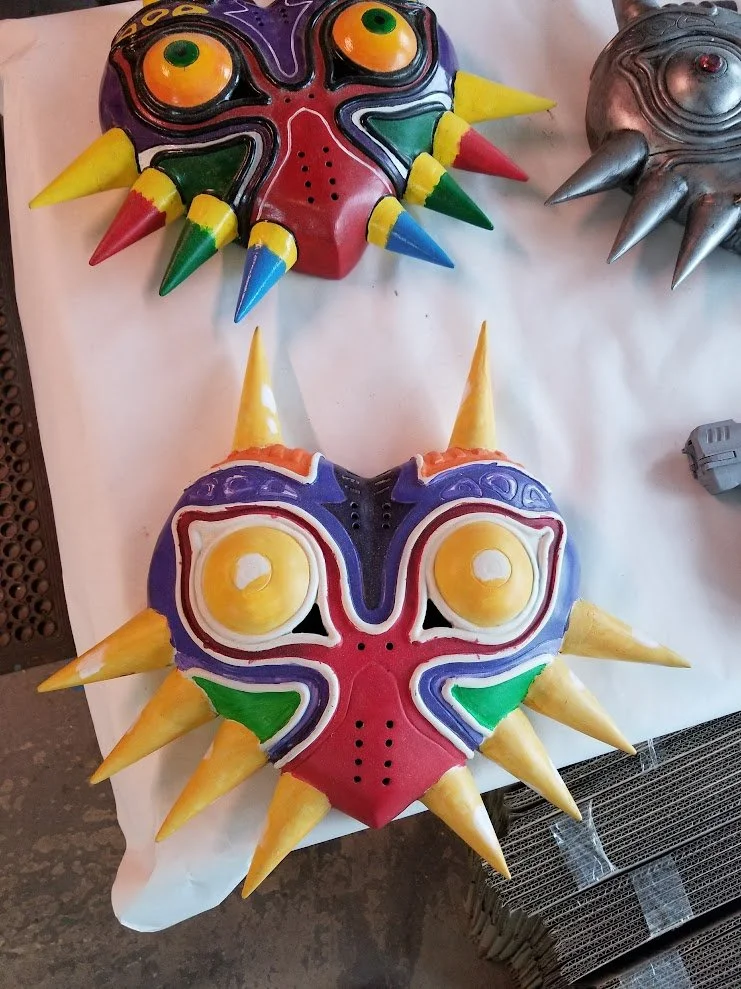
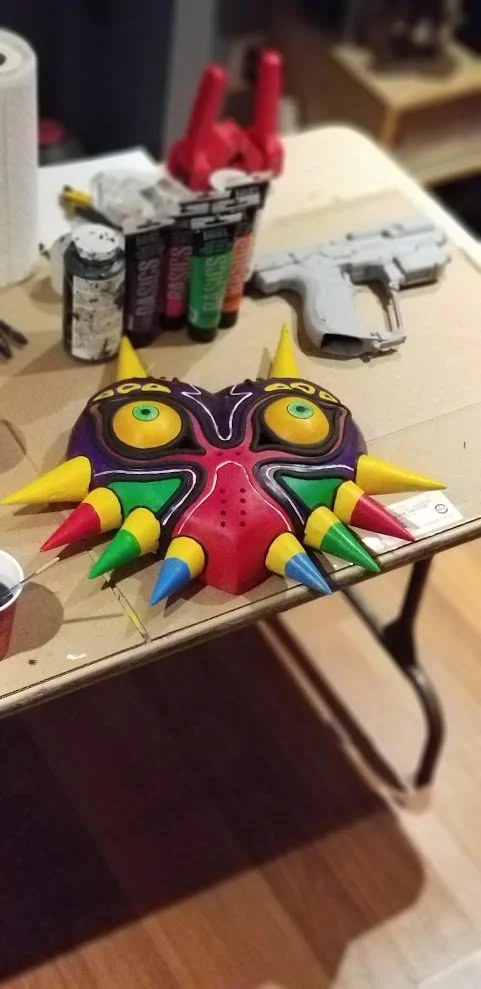
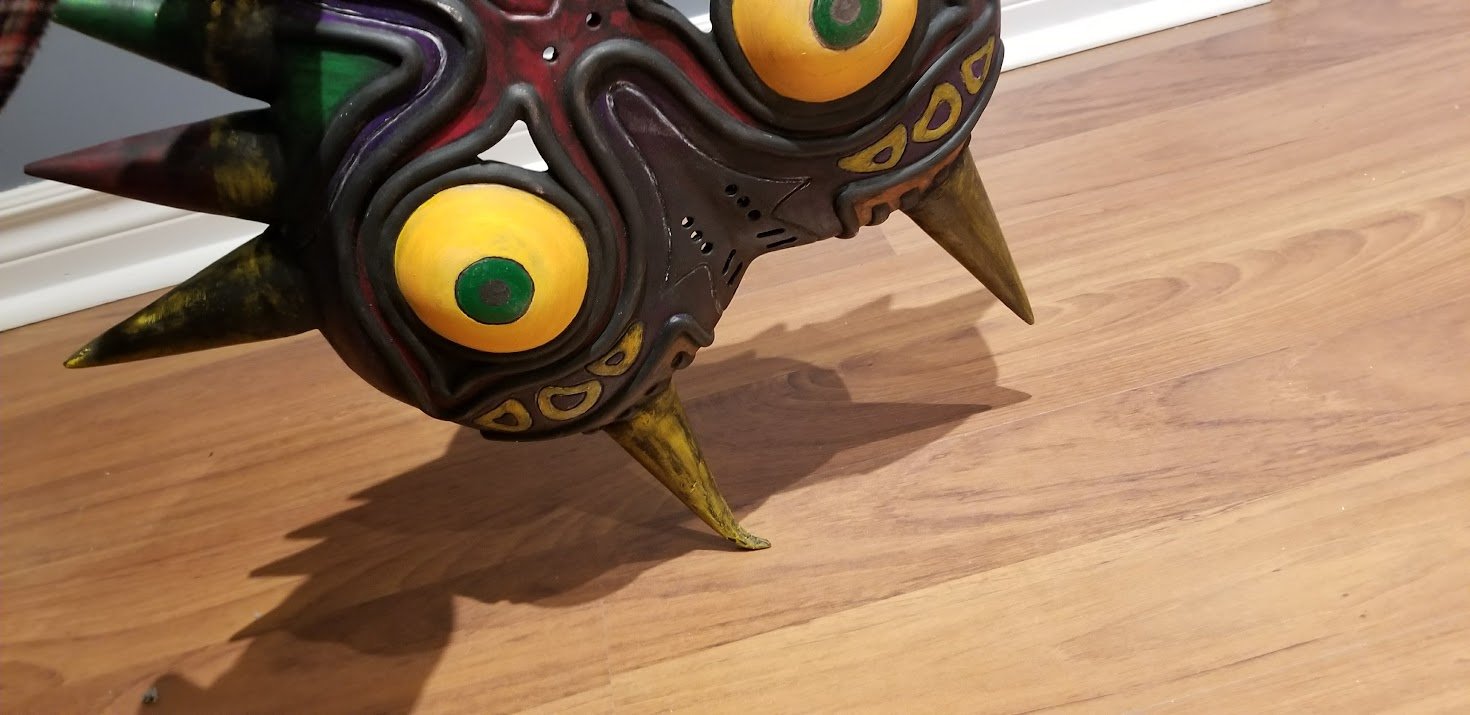
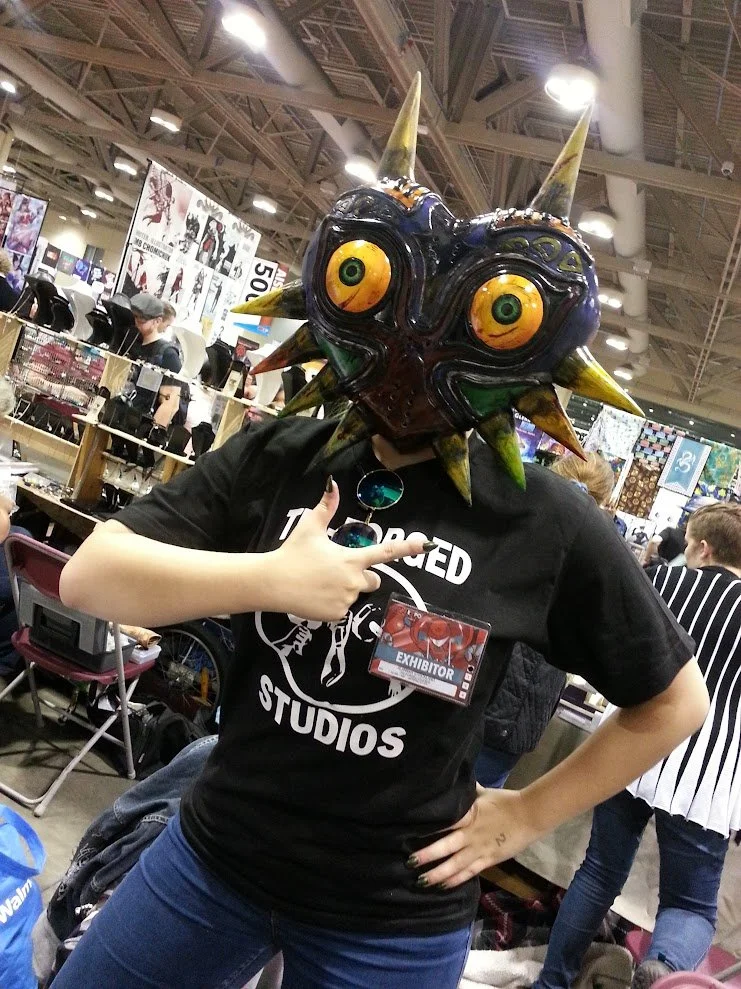
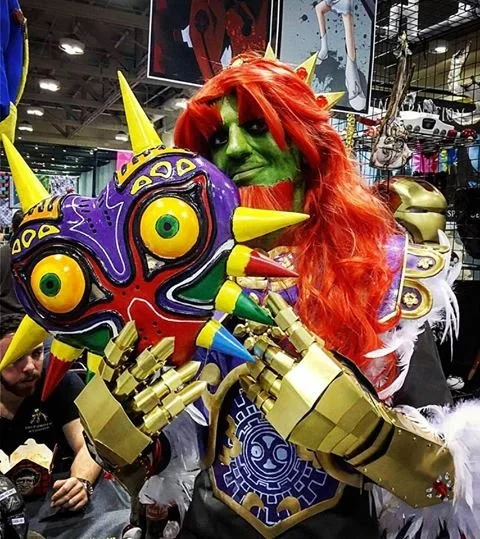
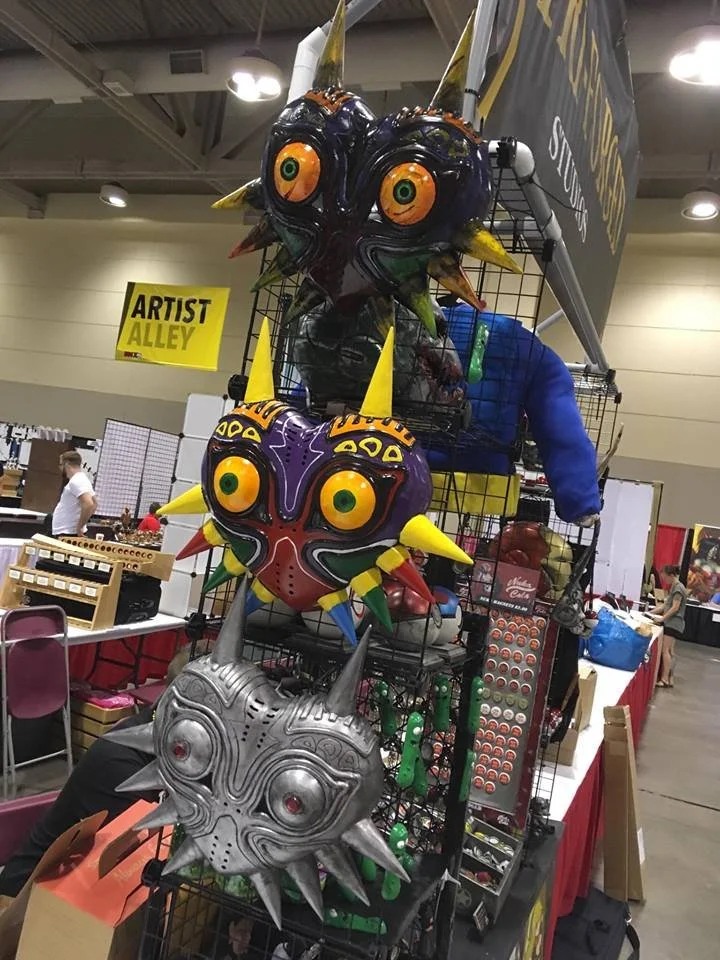
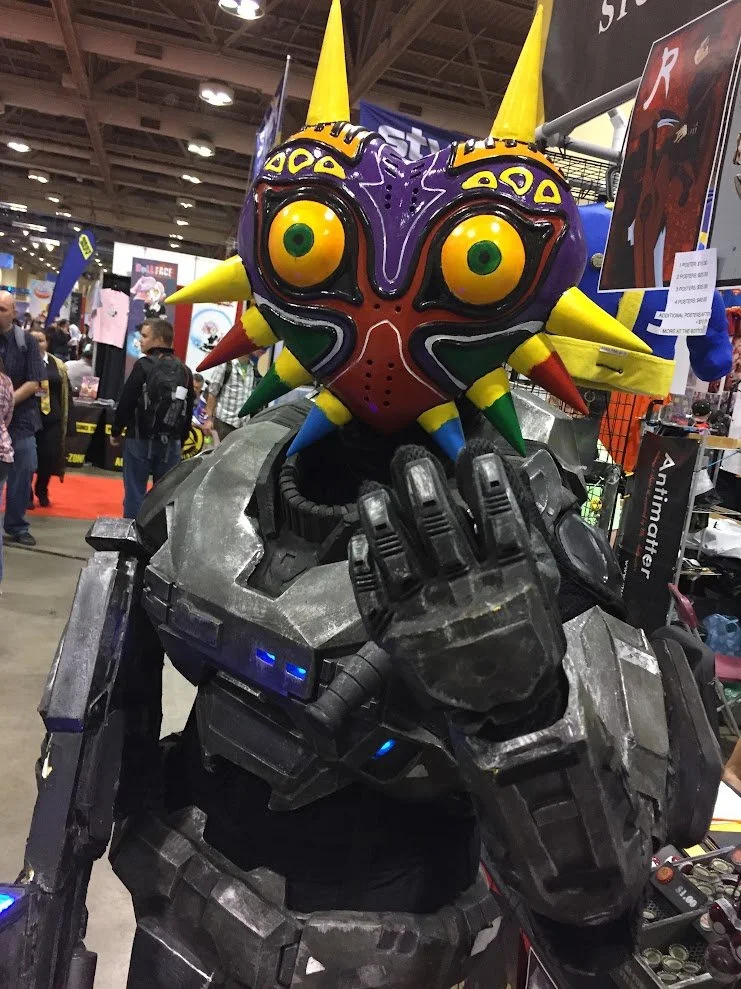
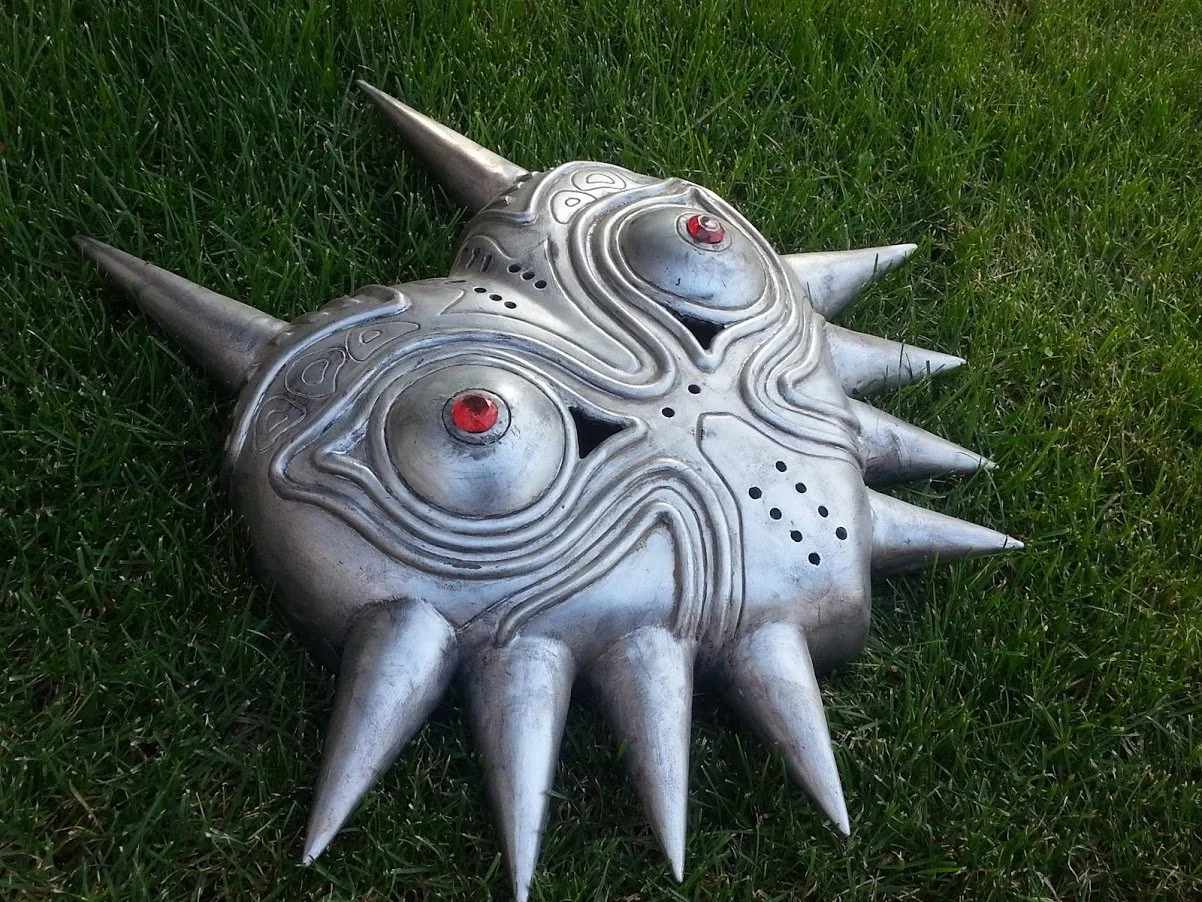
Majora’s Mask was a project we wanted to complete for a long time. It originally began in 2015 as a Pepakura build using files from DNP Props, but the project remained in that stage for several years. In the summer of 2017, after Tri-Forged Studios brought on shop assistants Alannah and Luis, we resumed the project in preparation for Toronto Fan Expo.
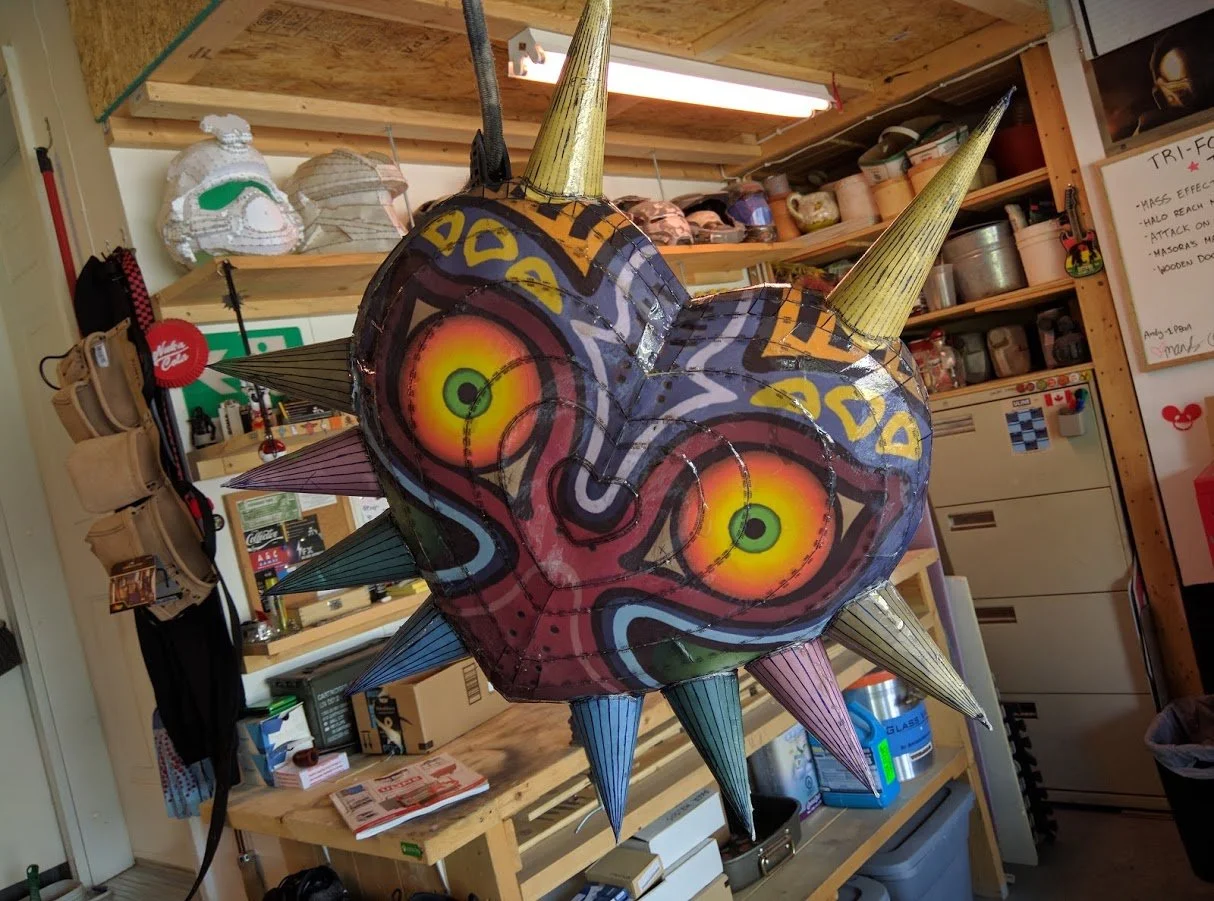
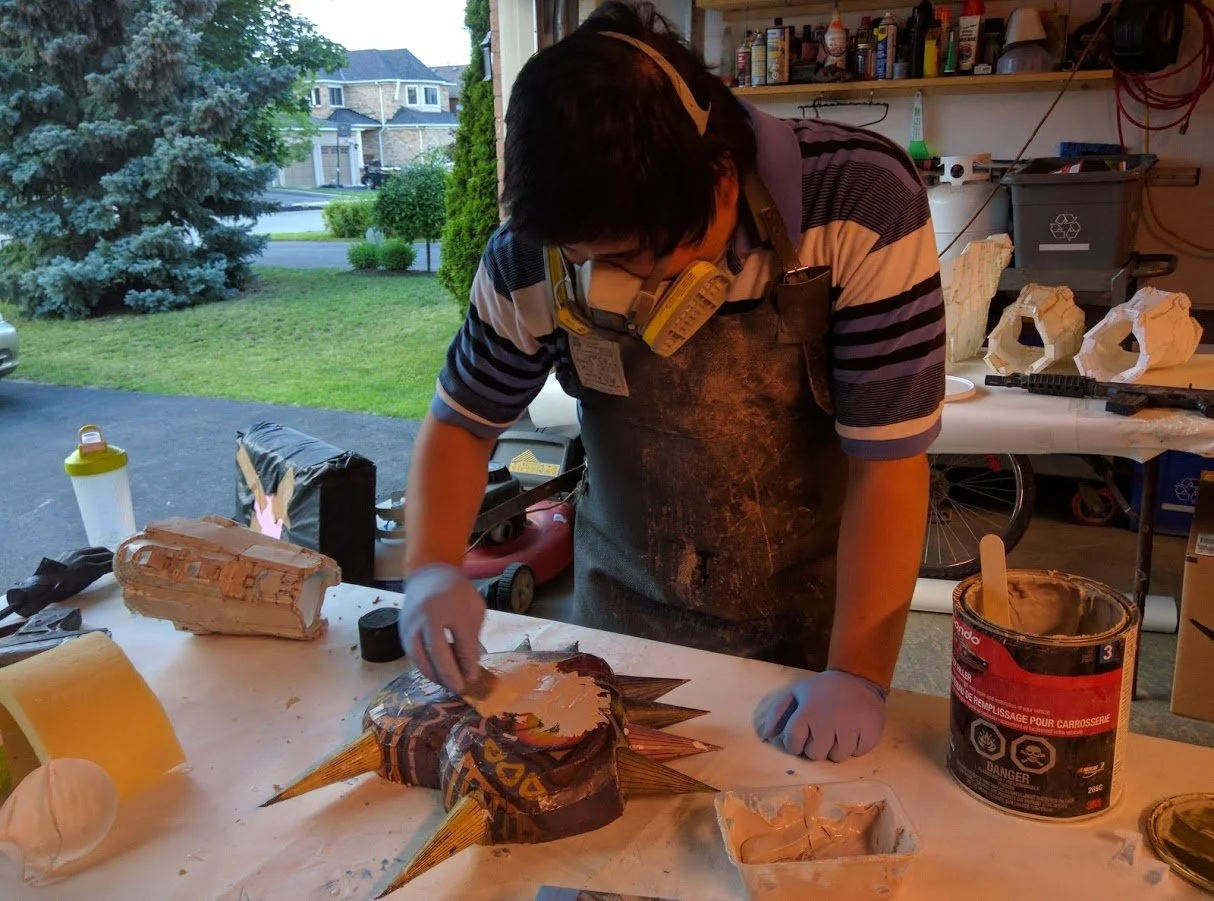
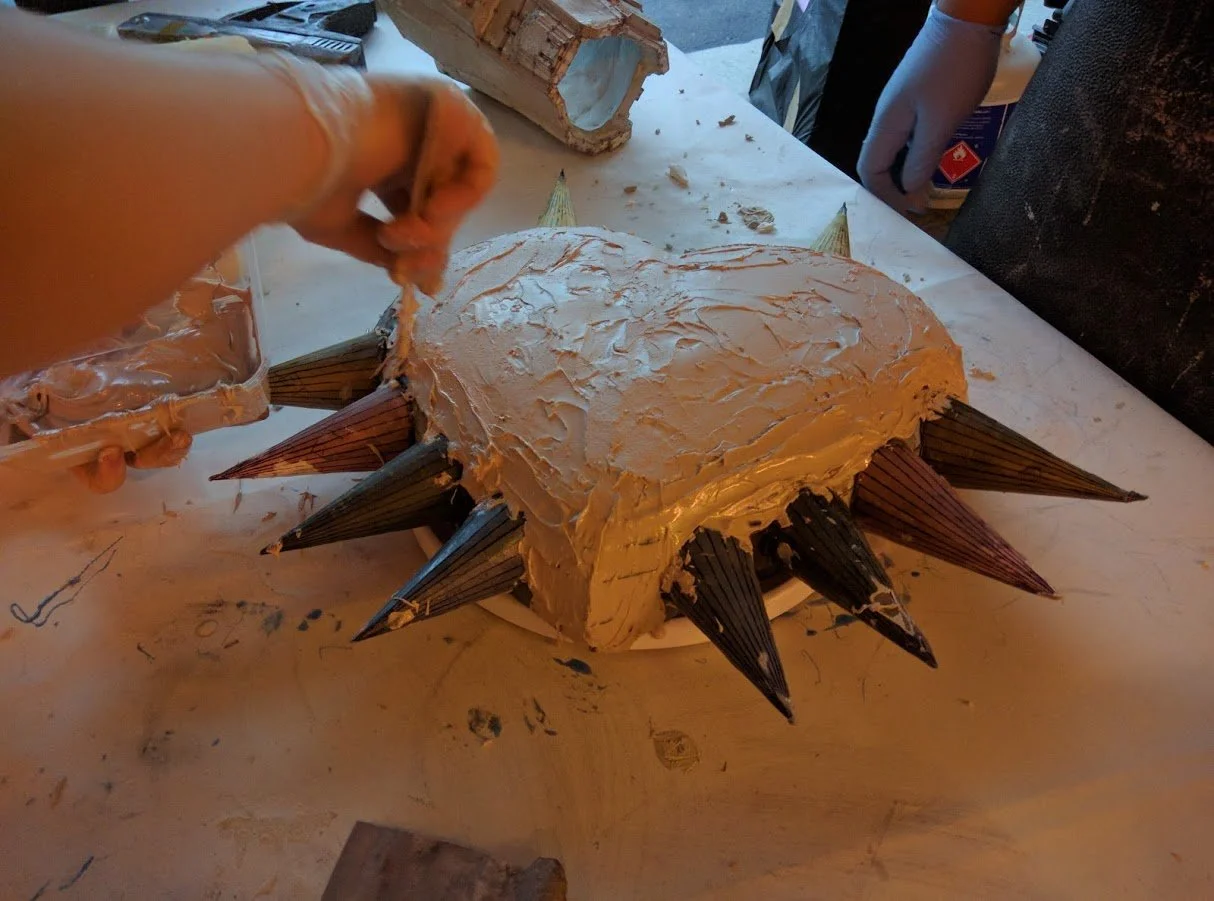
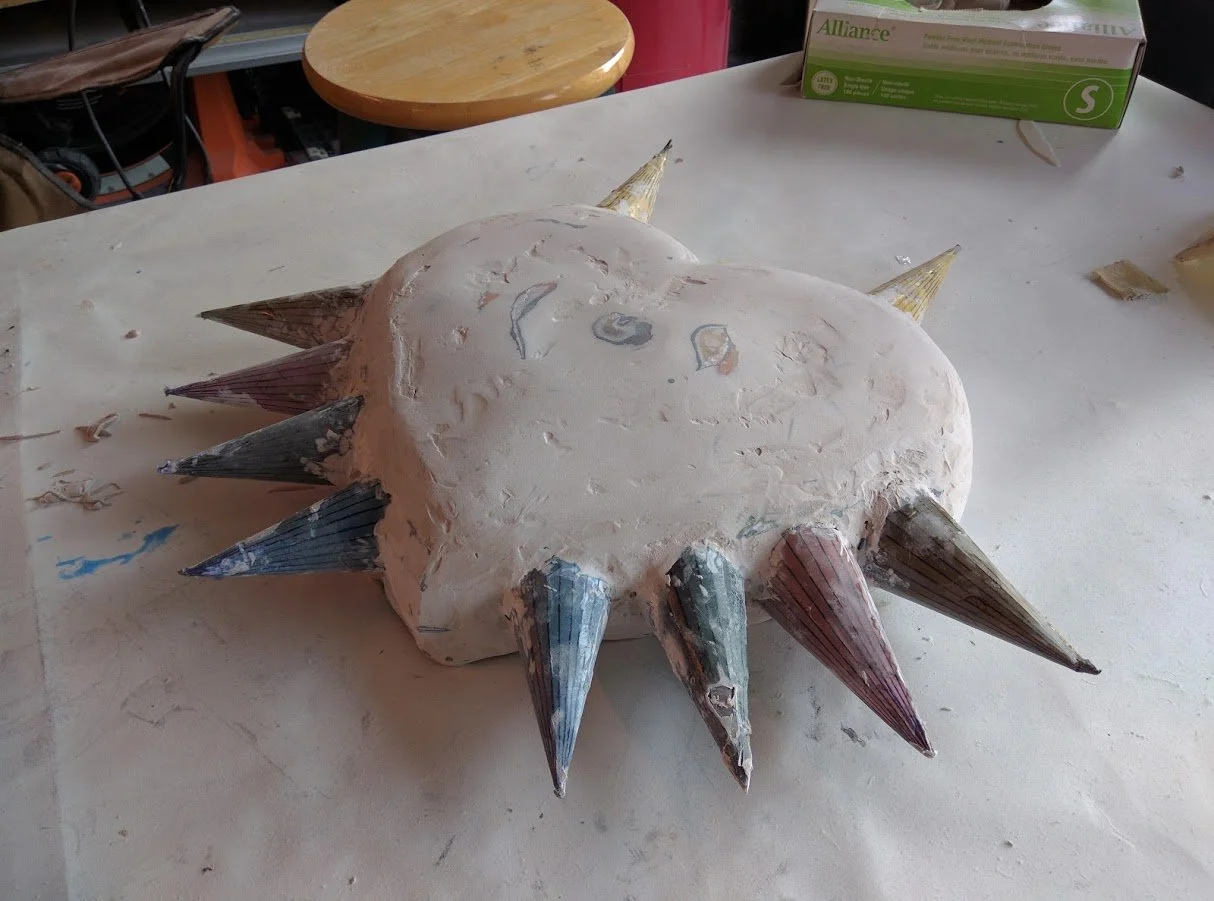
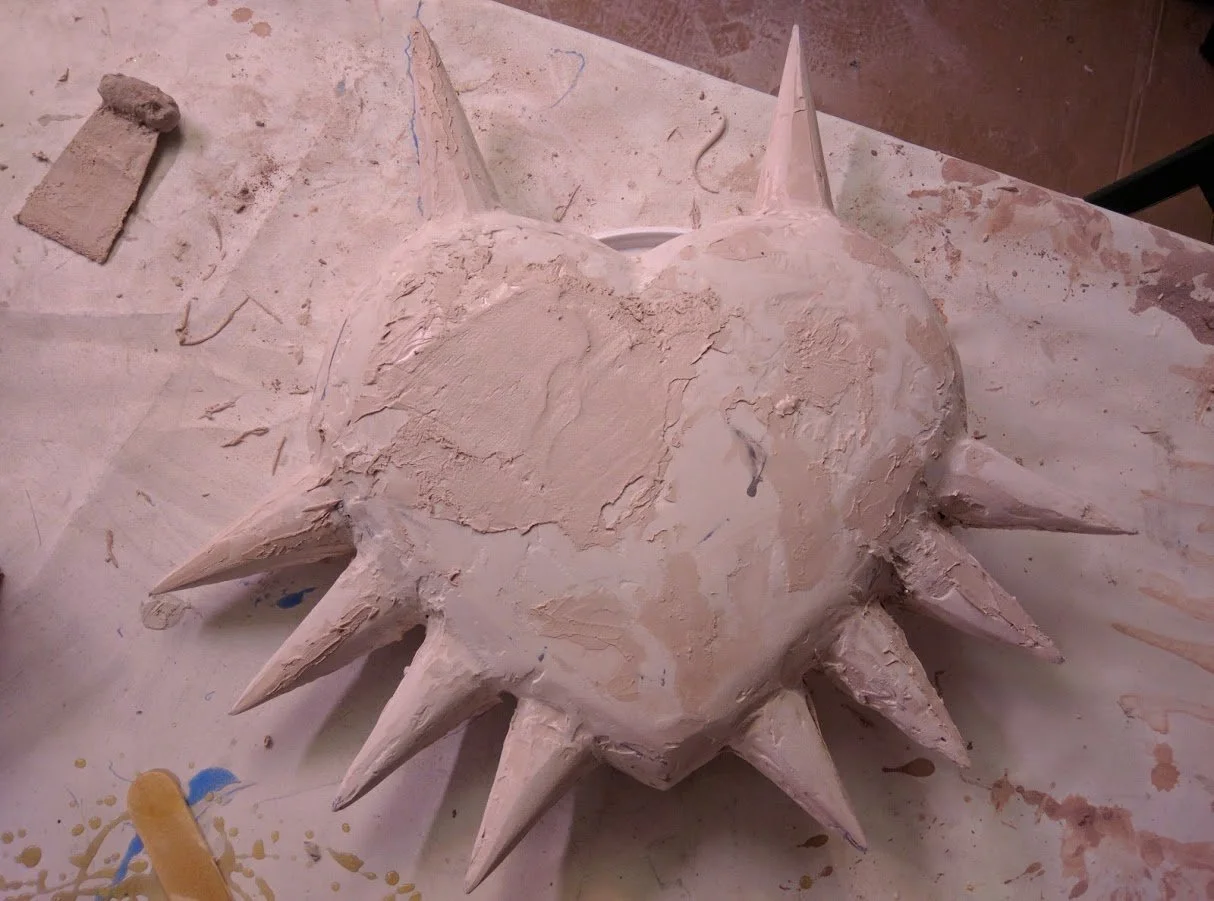
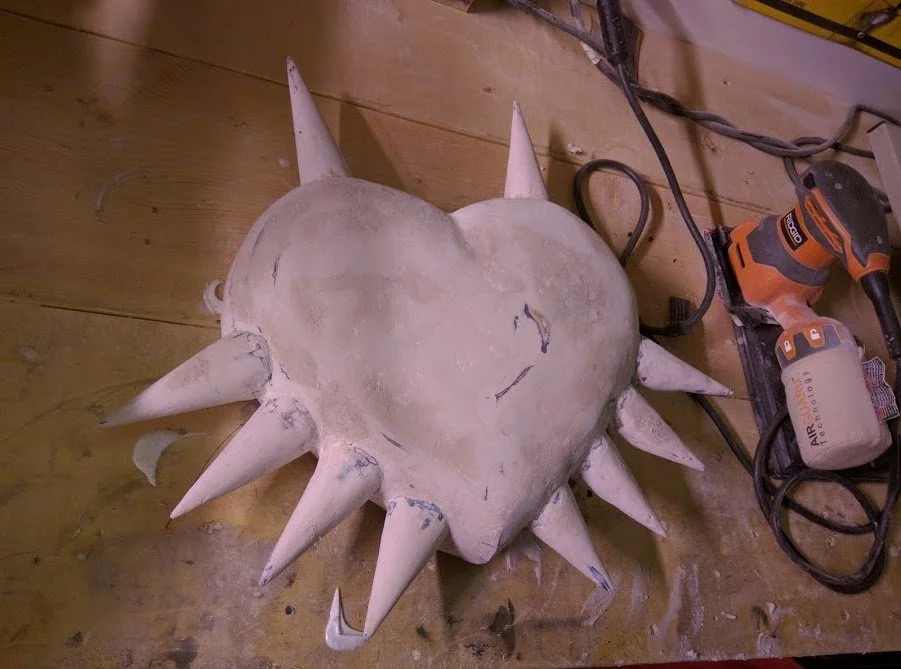
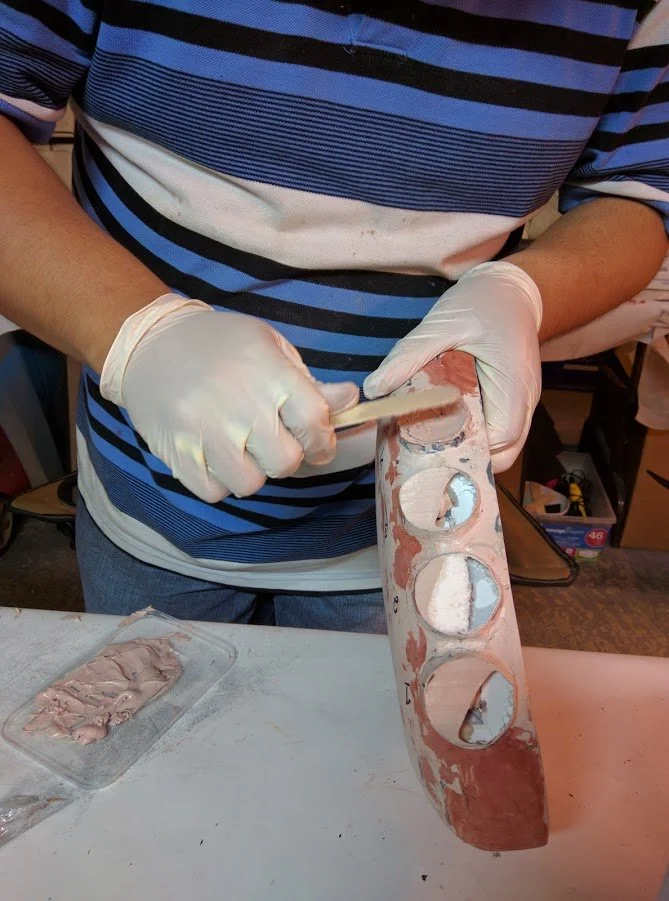
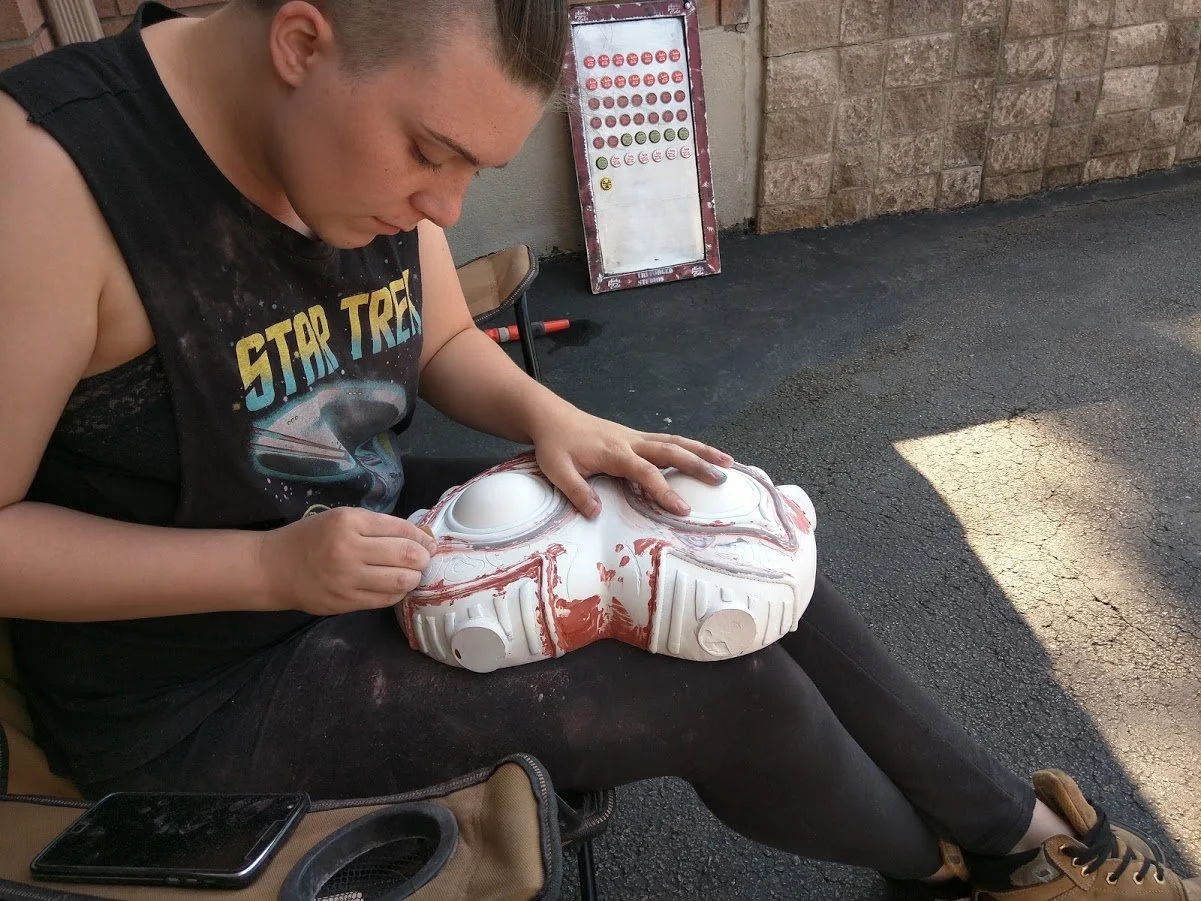
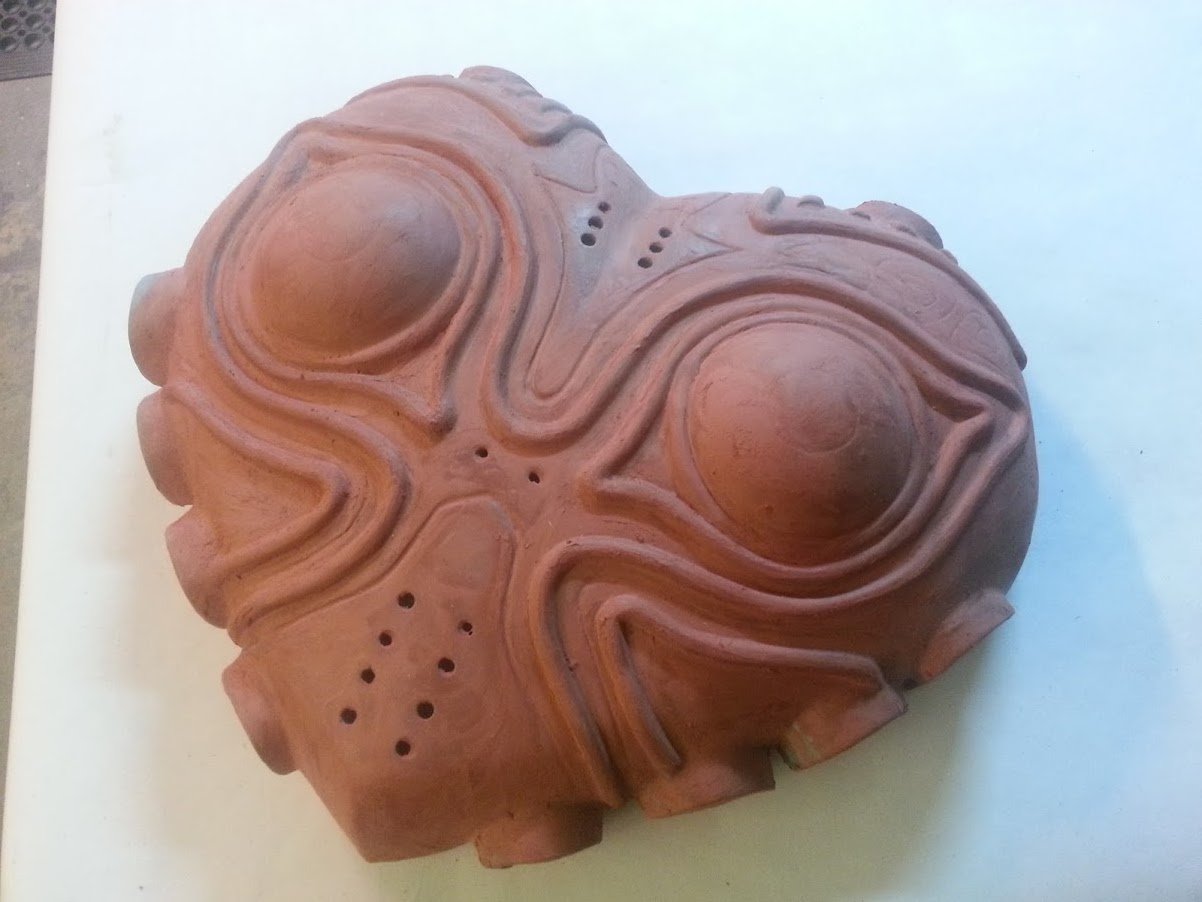
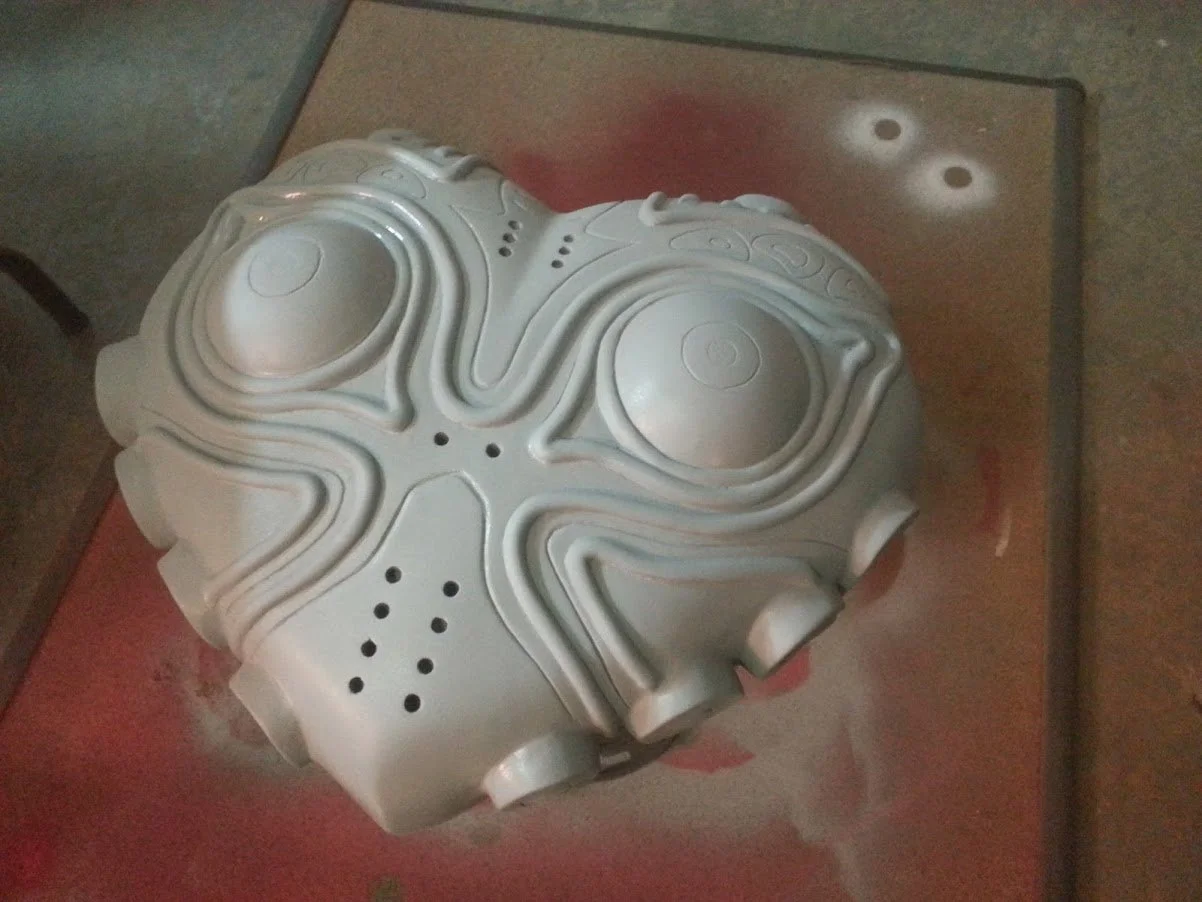
The mask was printed on 110 lb cardstock, then cut, folded, and assembled using the Pepakura method. Several coats of fiberglass resin were brushed onto the paper model to add strength for the next stages of reinforcement and surface work. Bondo body filler was applied to build thickness, since the intention was to mold the back of the mask. The surface was refined through multiple sanding passes to achieve a smooth finish.
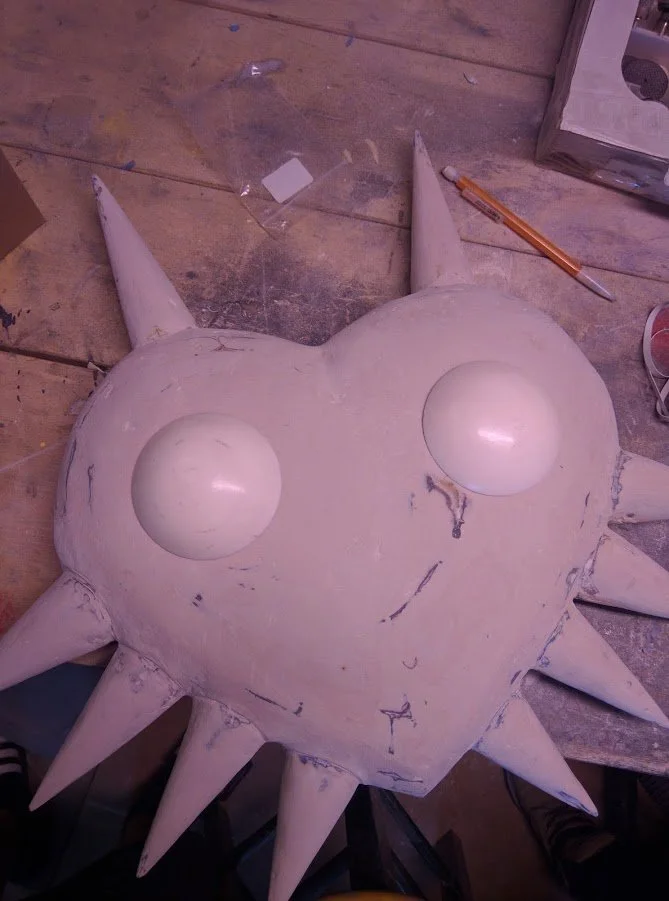
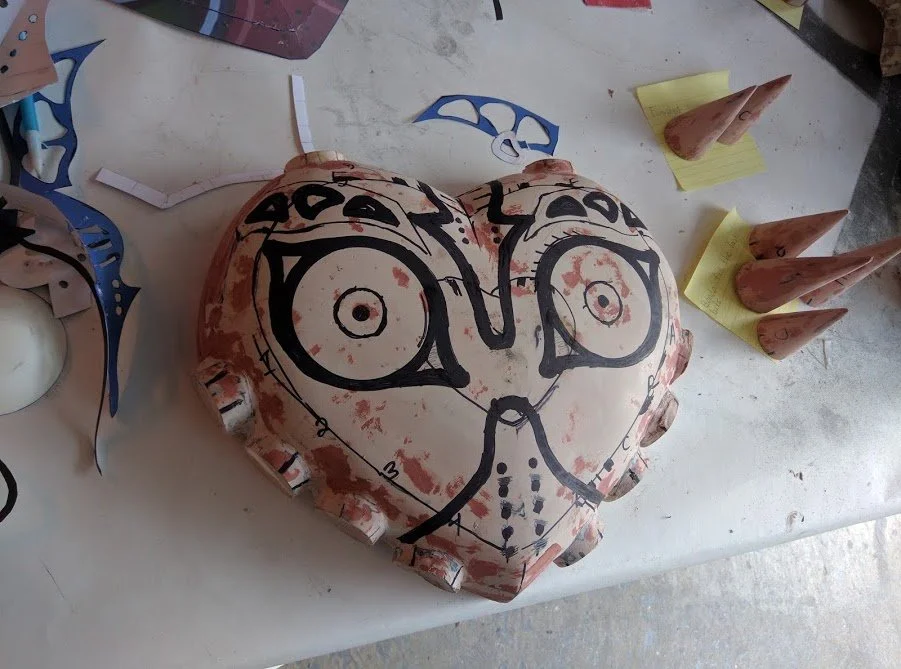
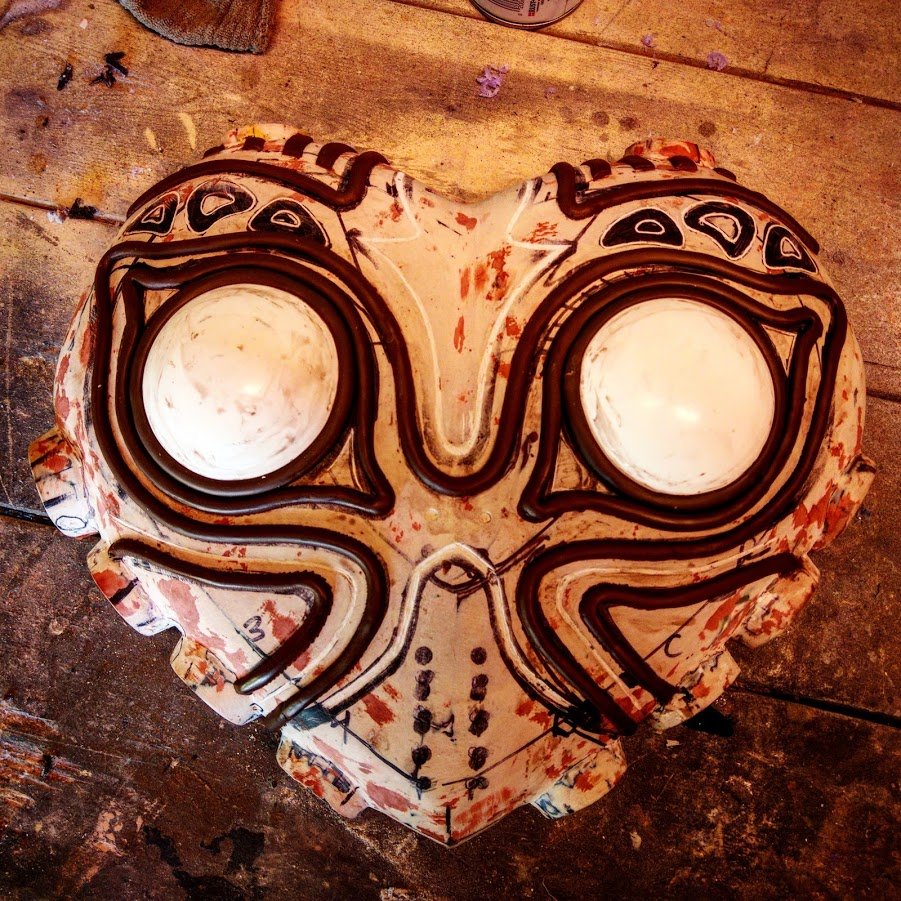
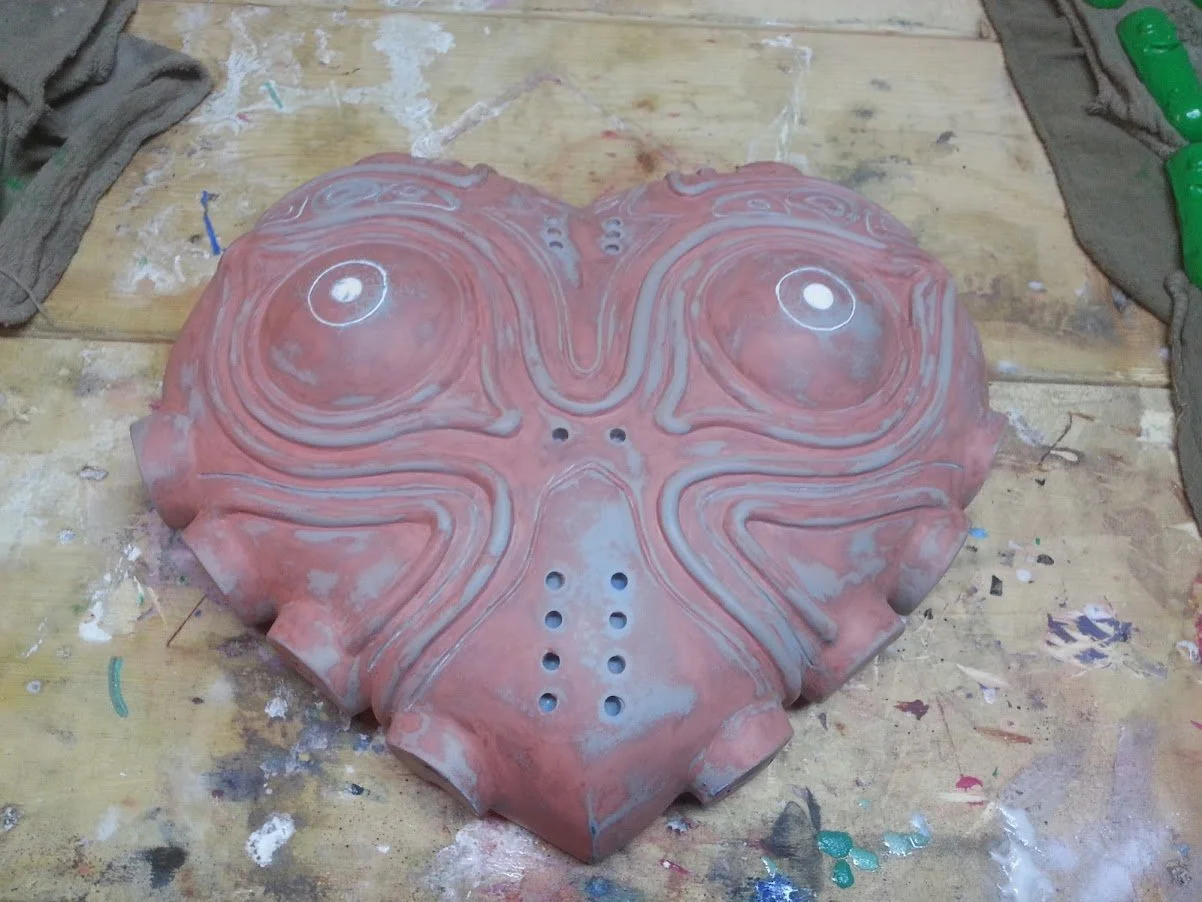
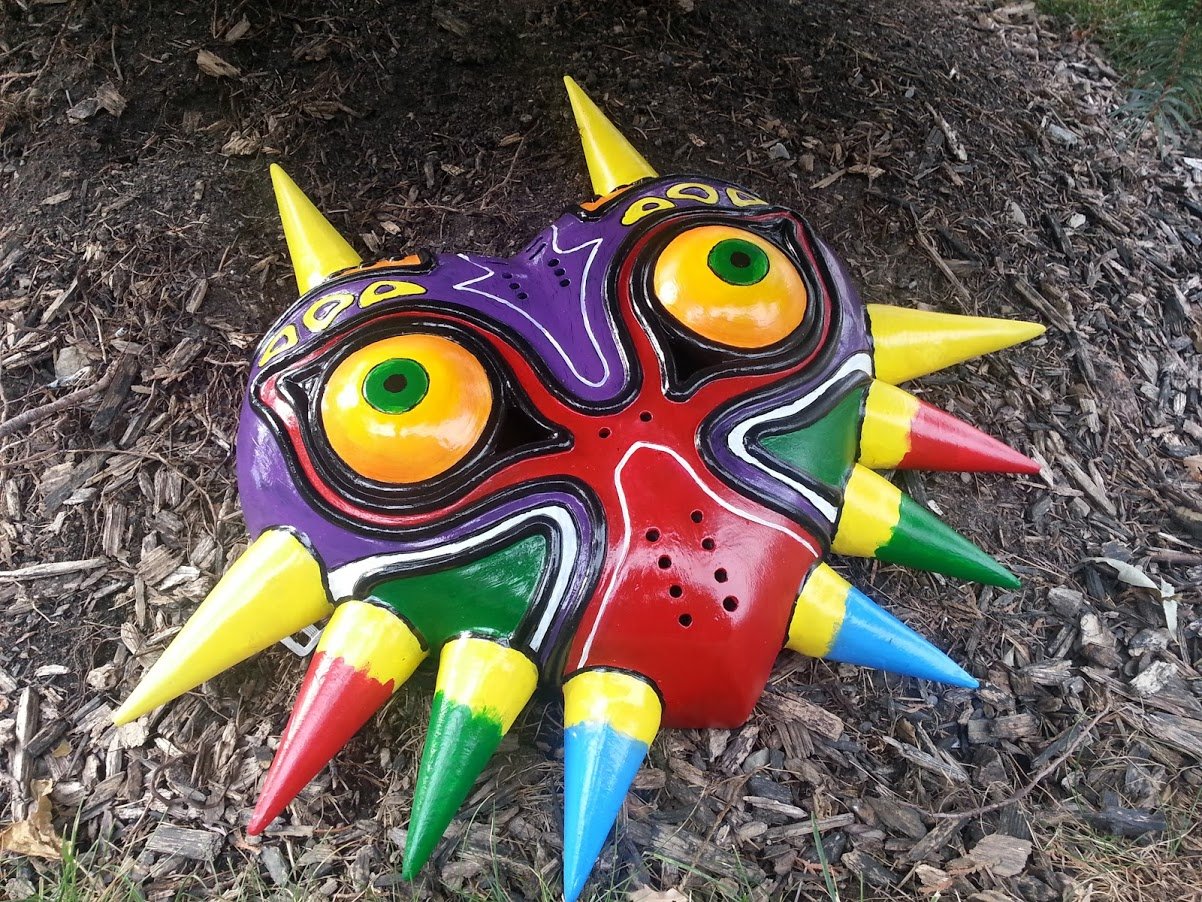
The rounded eye forms were created using the tops of old large Pokéballs. The black line details were built using Apoxie Sculpt, pushed through an extruder with a half-circle attachment. A separate Pepakura template was printed and used as a placement guide to keep the lines consistent. The embossed sections were engraved using a Dremel rotary tool. Additional Bondo work followed.
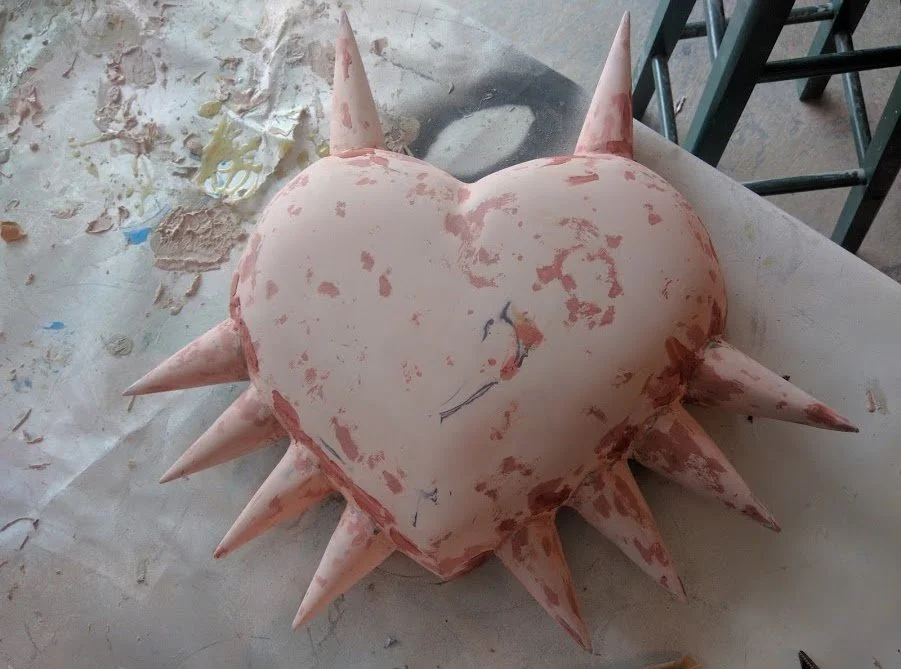
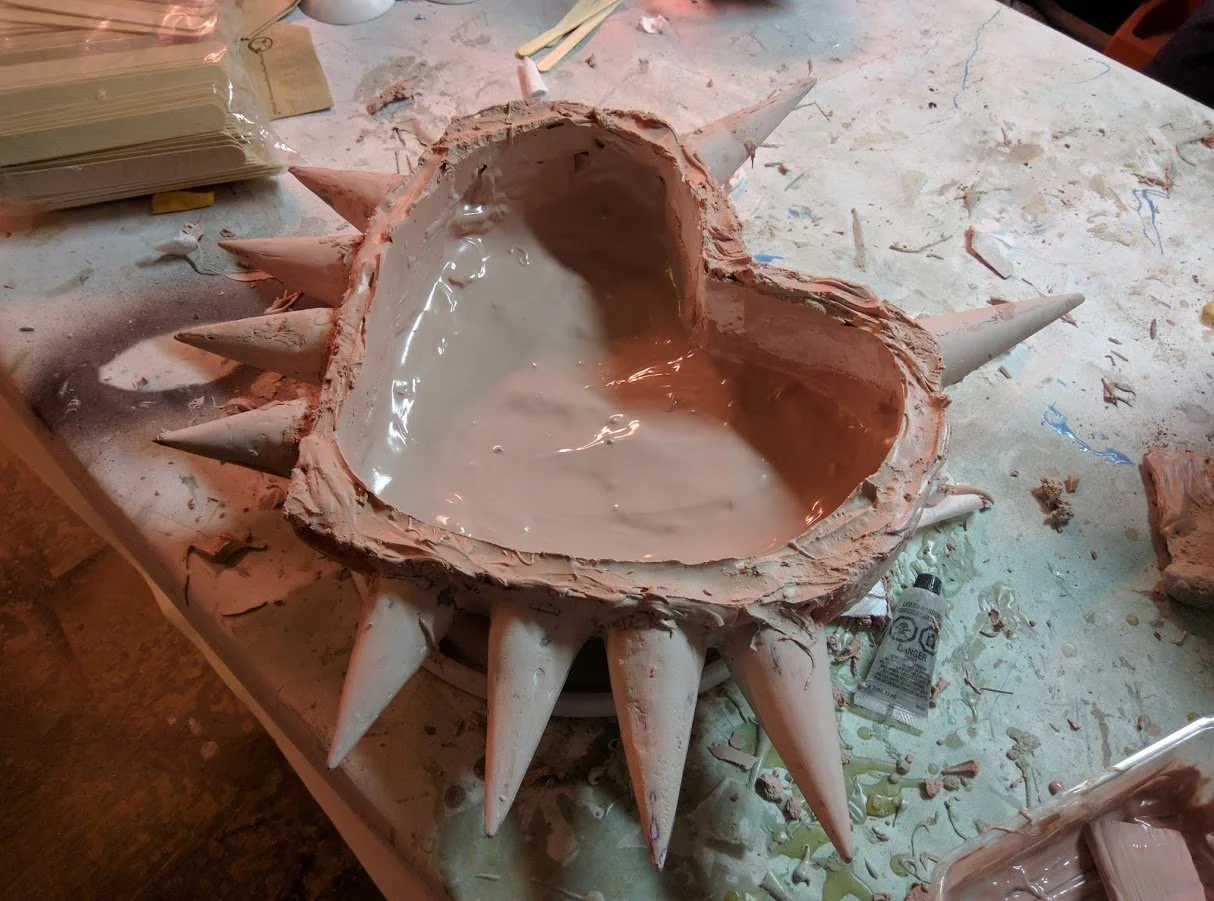
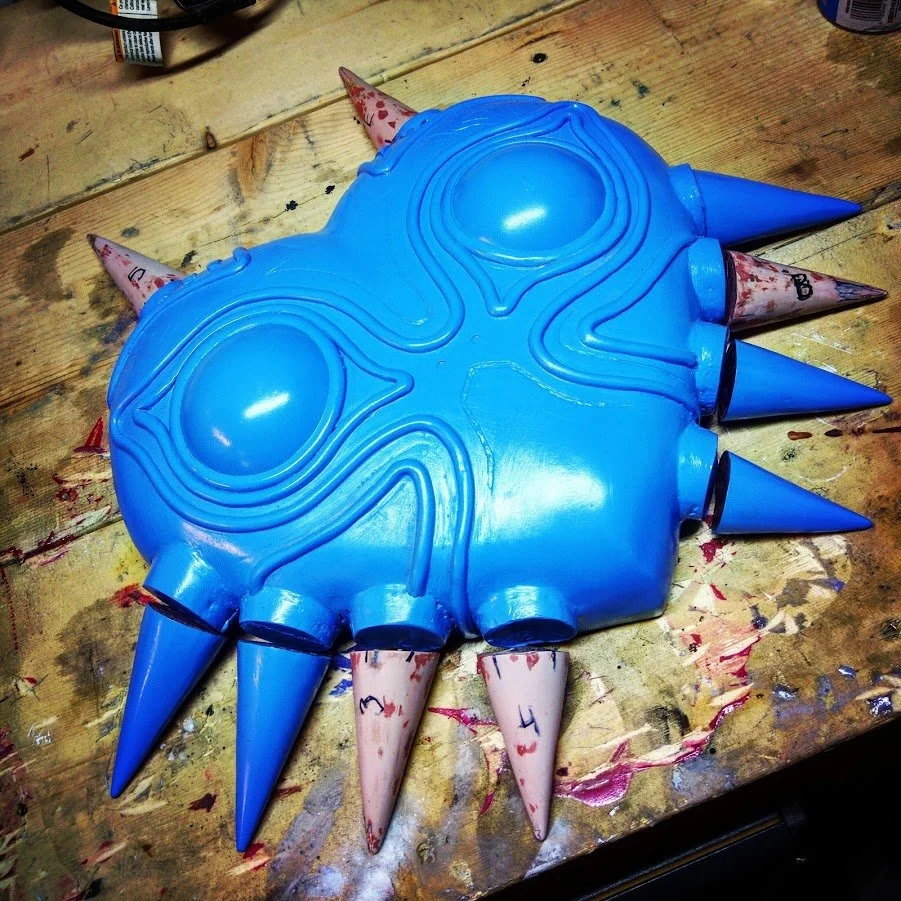
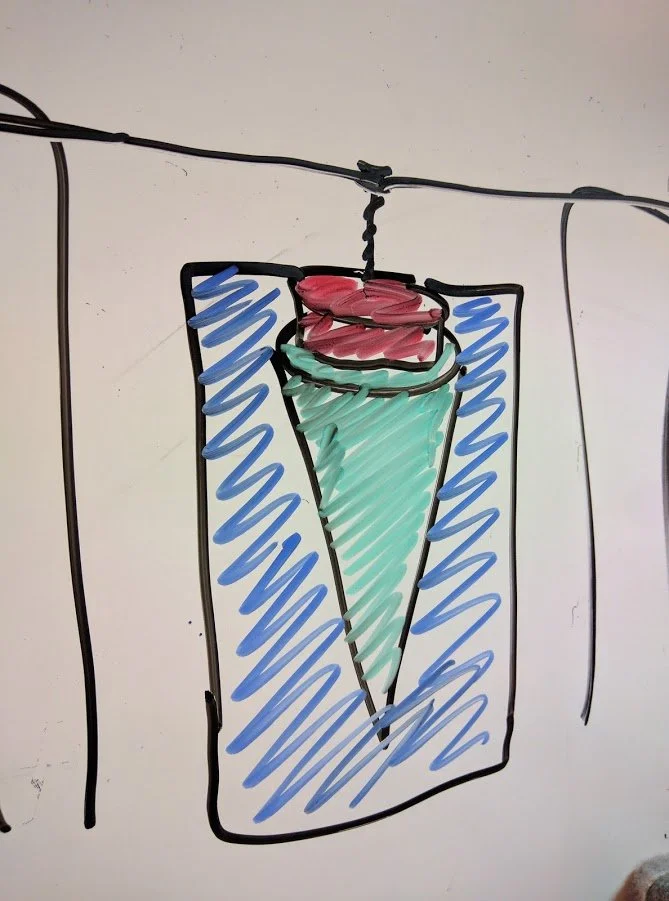
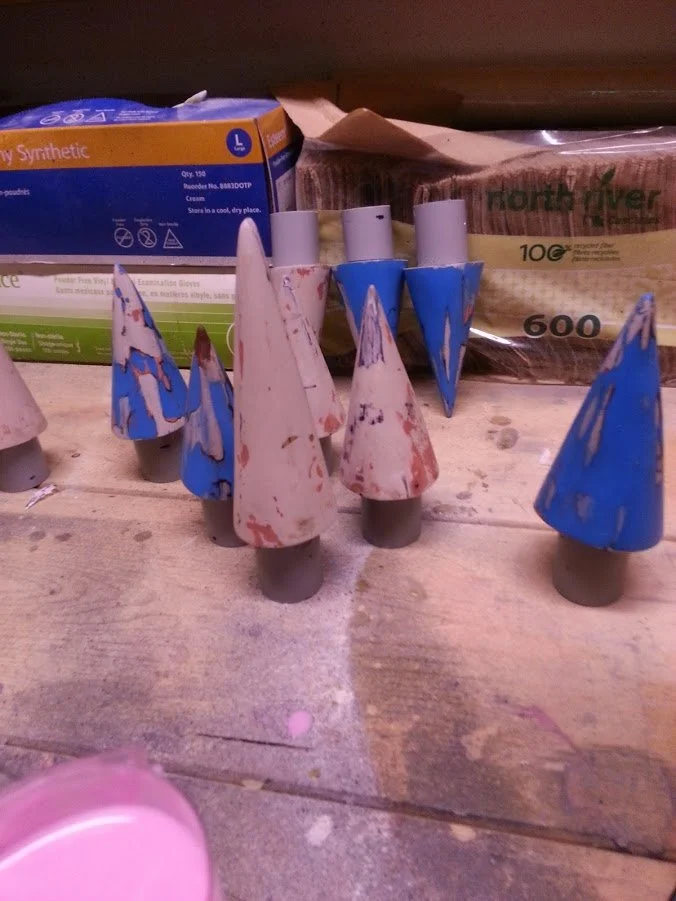
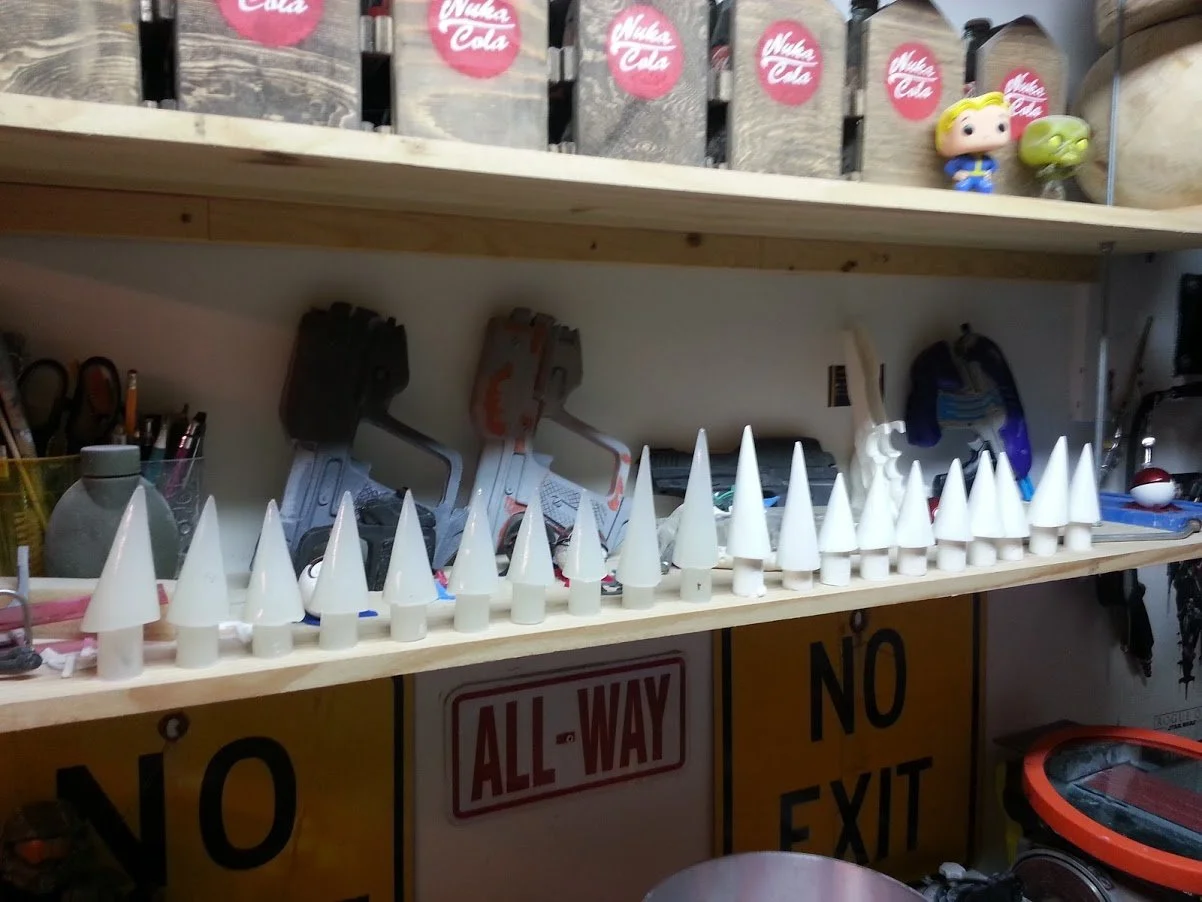
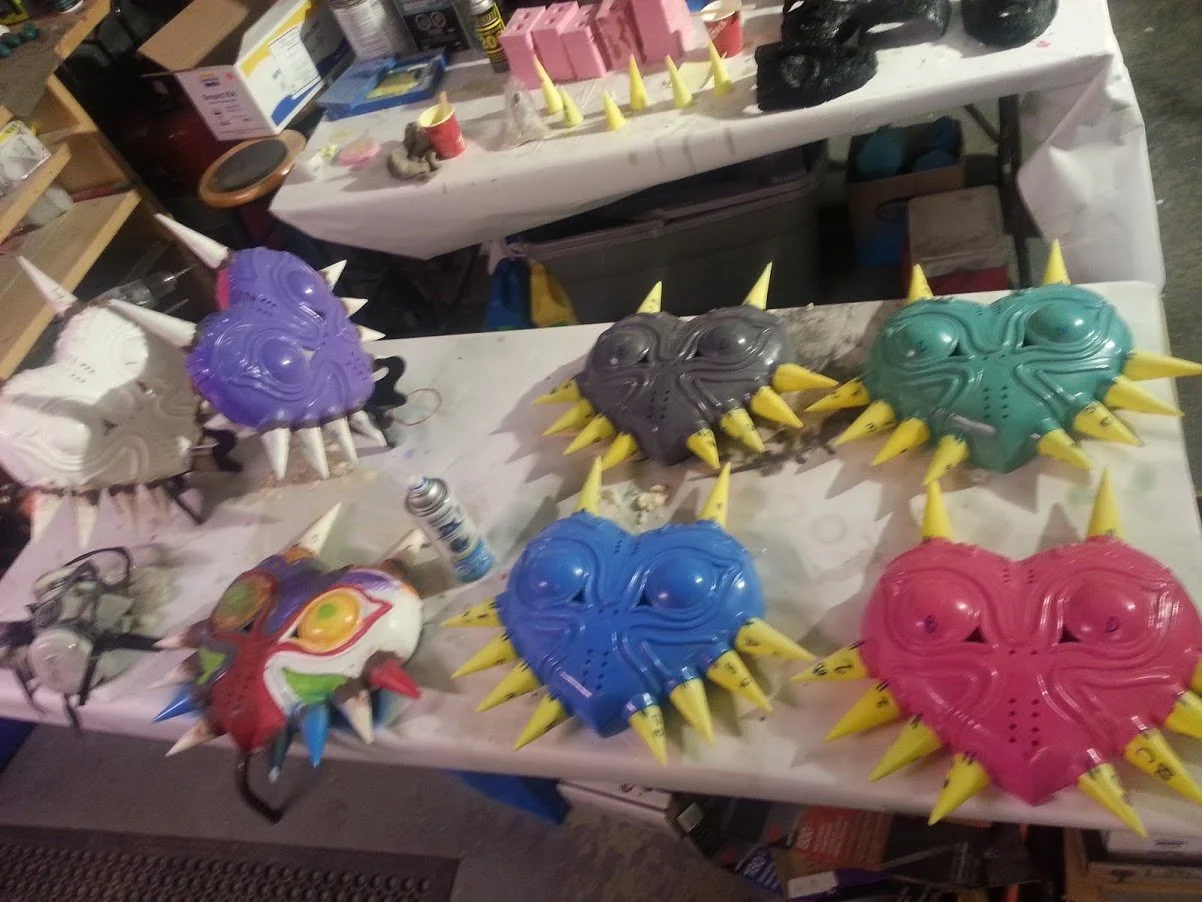
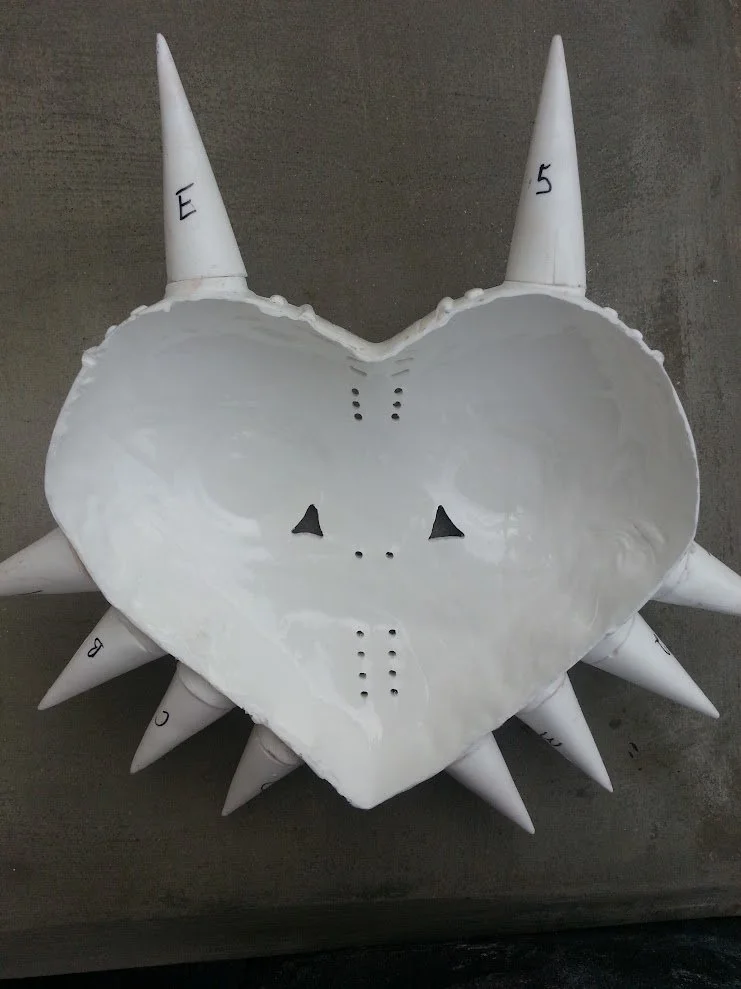
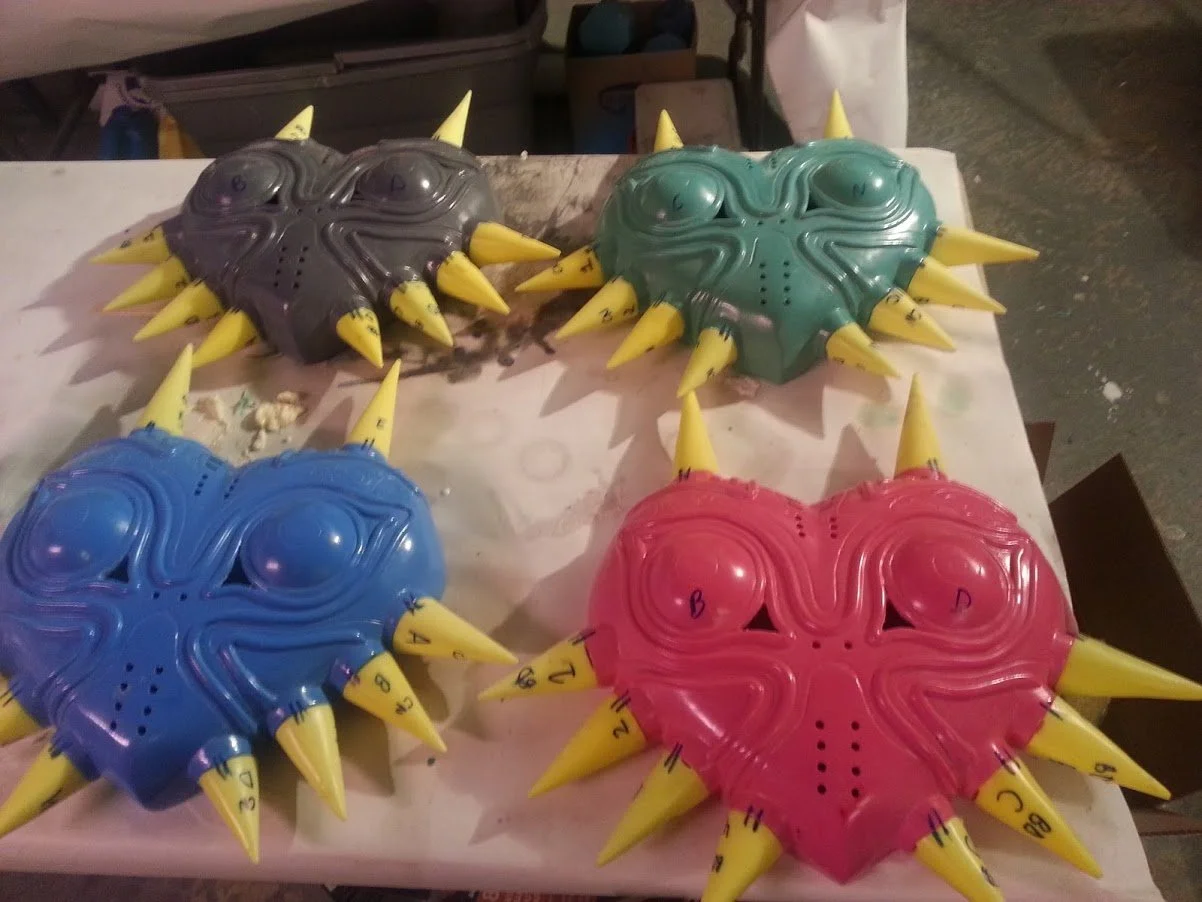
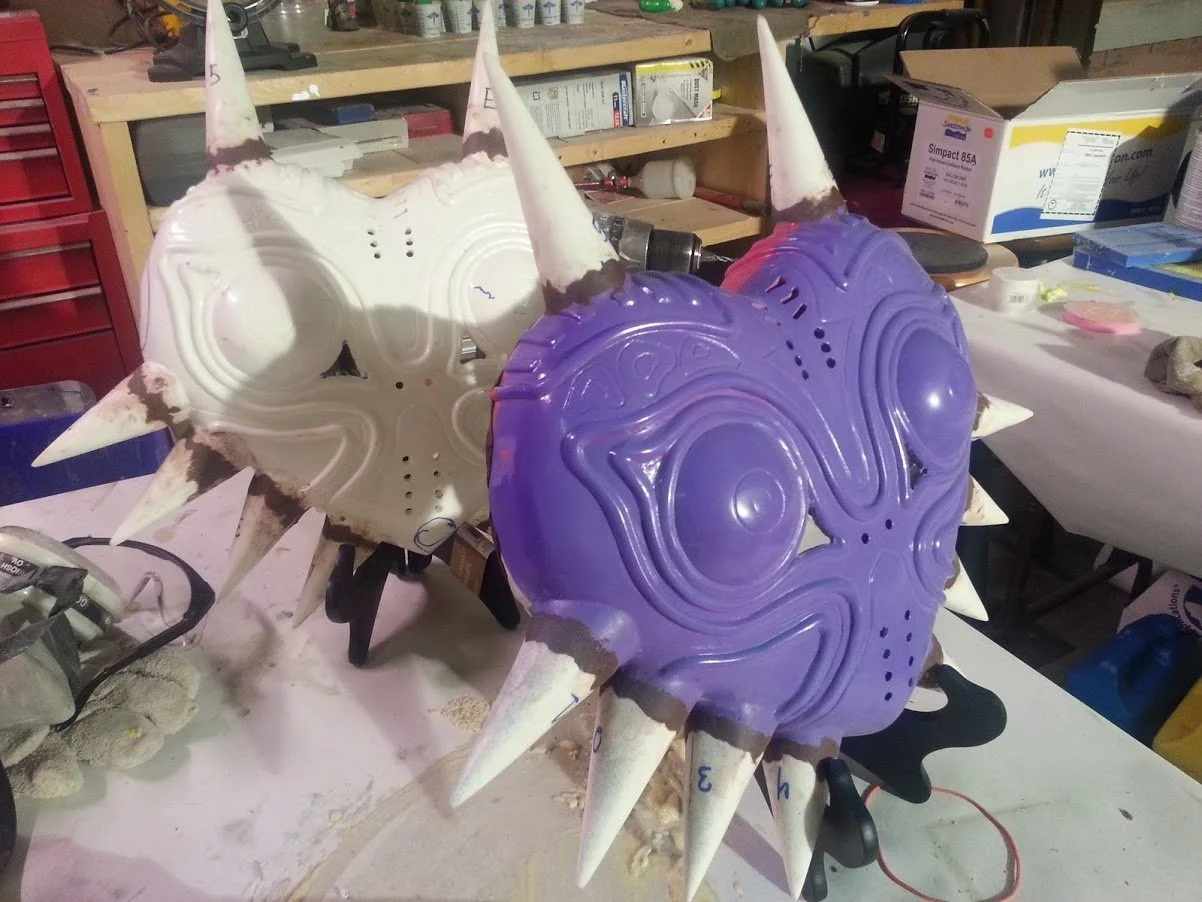
One of the main challenges was creating a silicone mold of the mask with its 10 horns extending in different directions. The solution was to remove each horn, label them, and mold them separately. The horns were cast in urethane rubber to make them safer for convention use and less likely to cause injury.
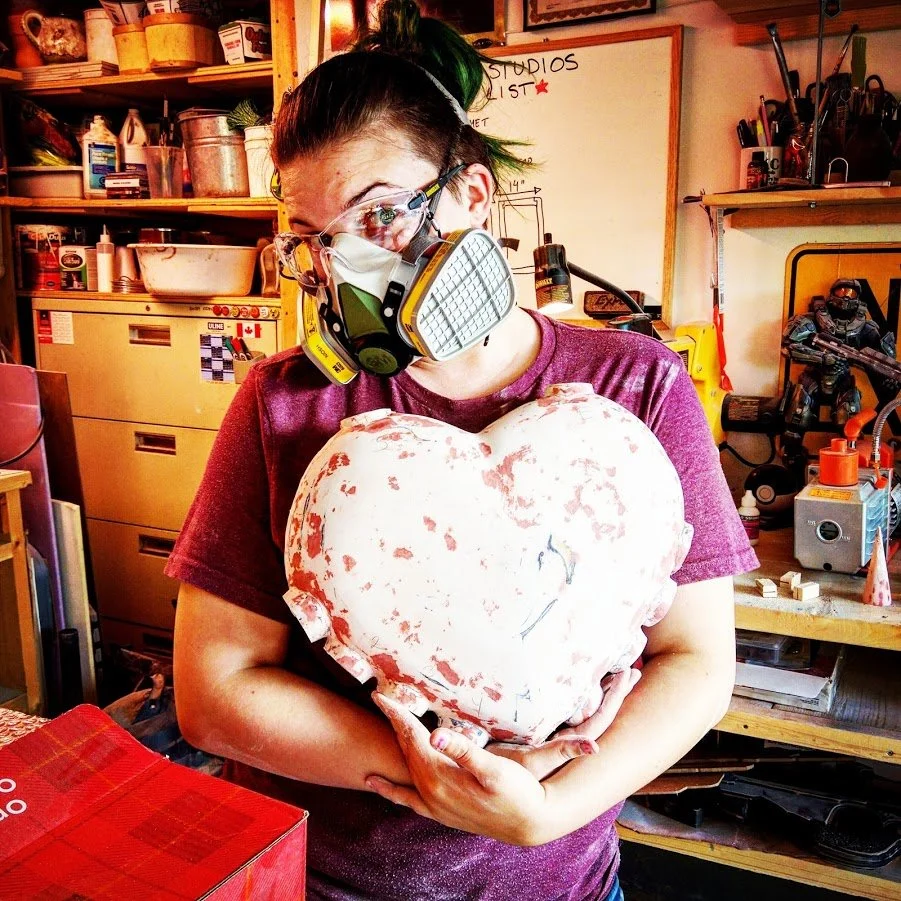
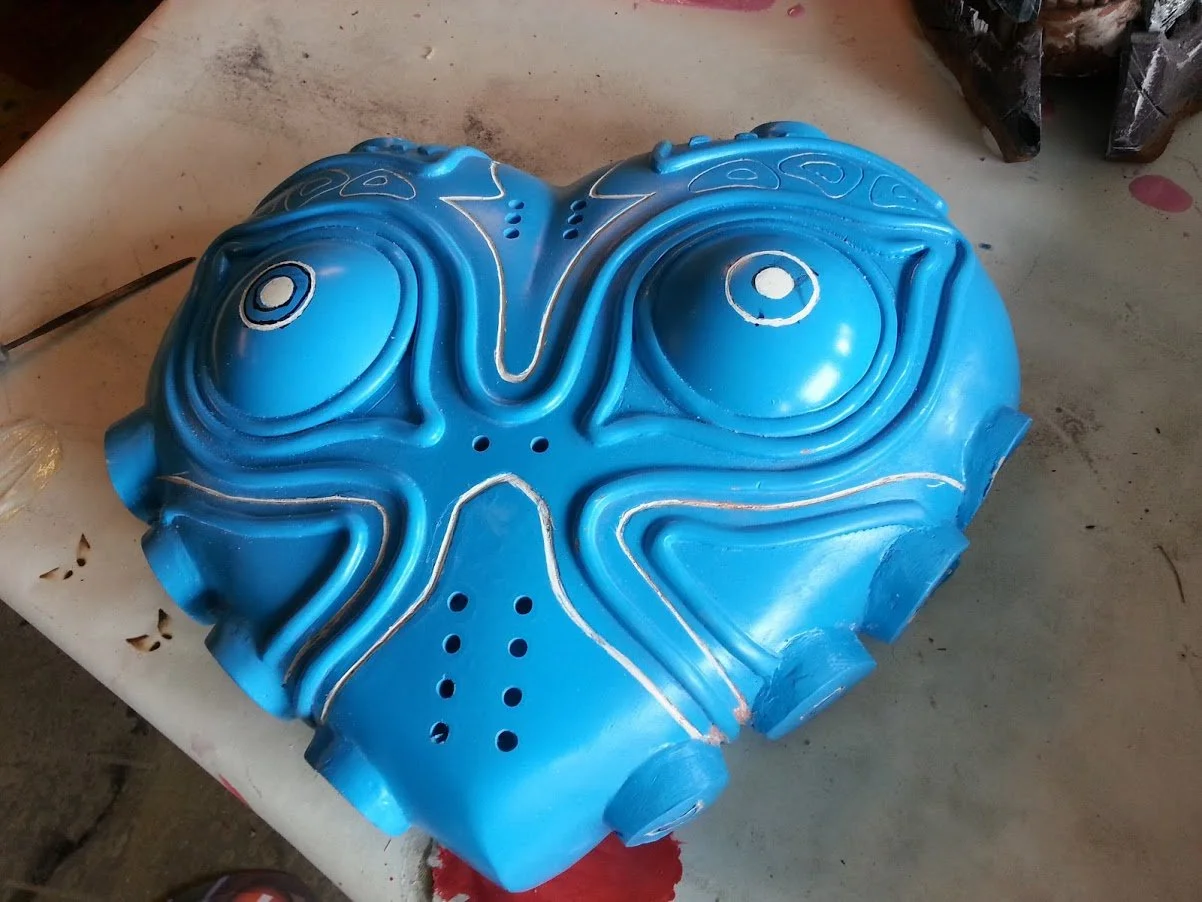
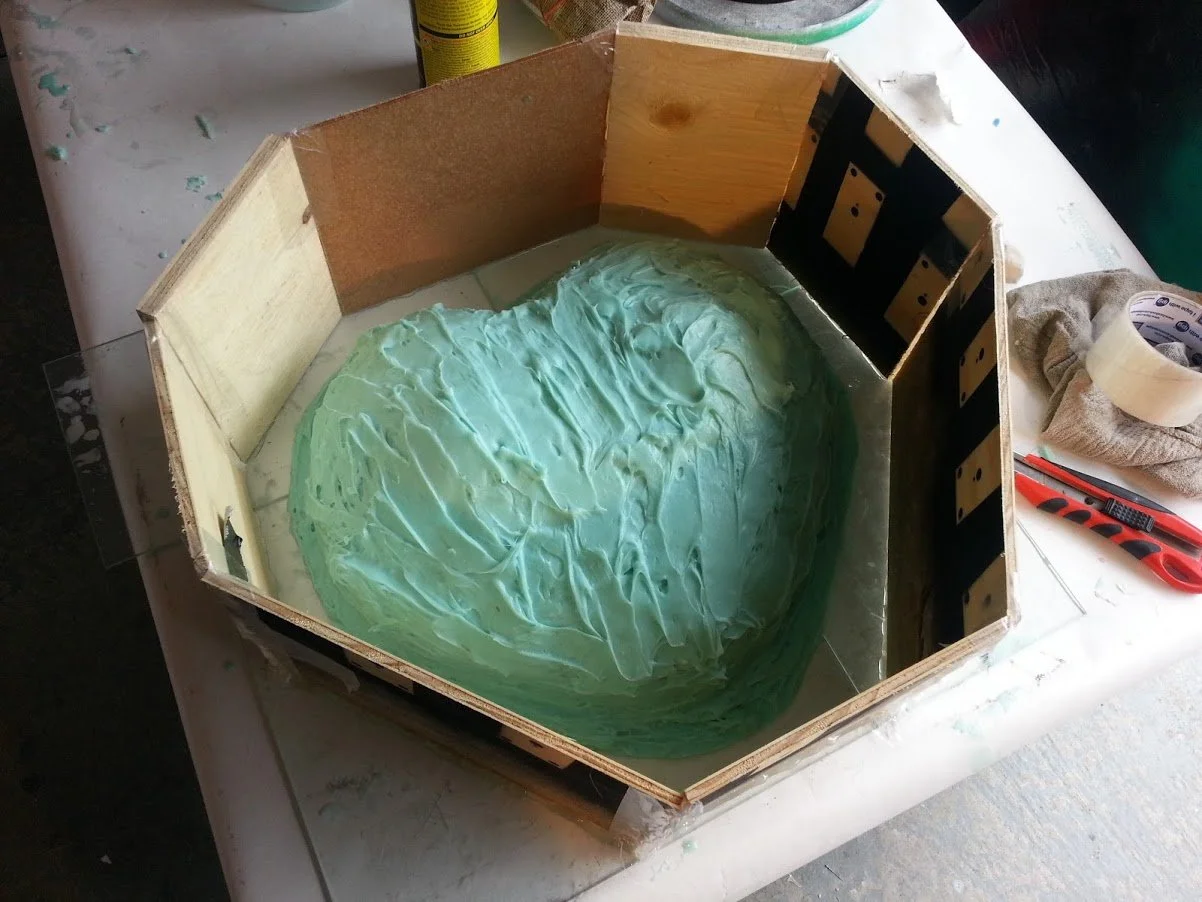
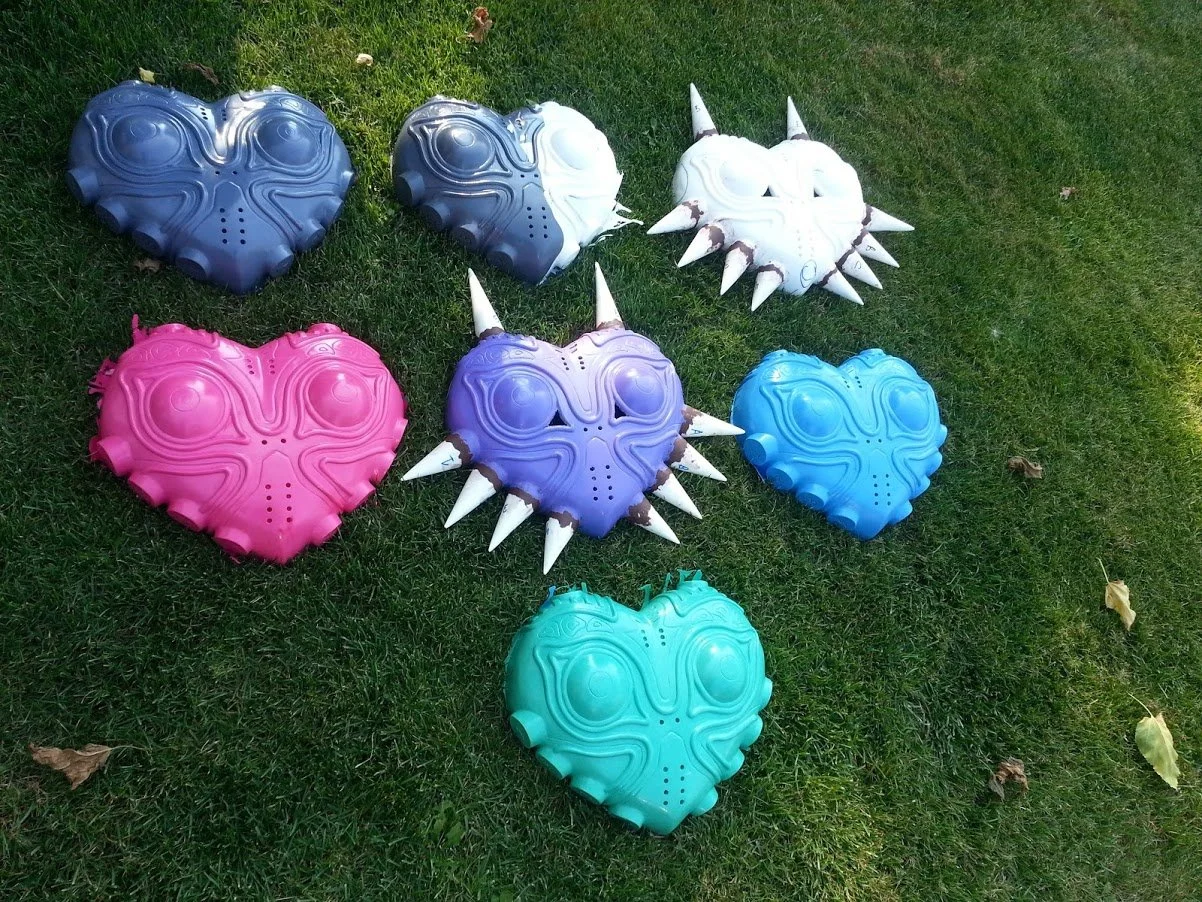
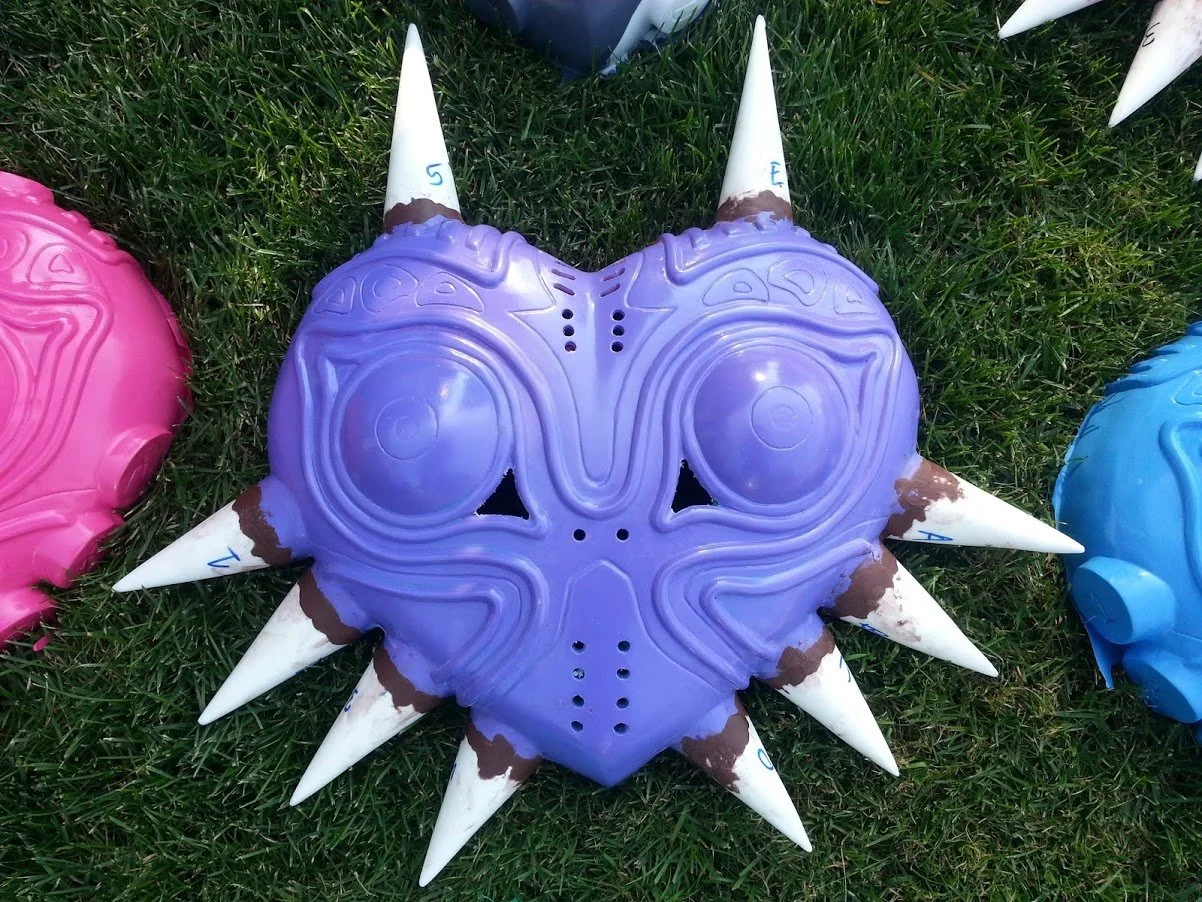
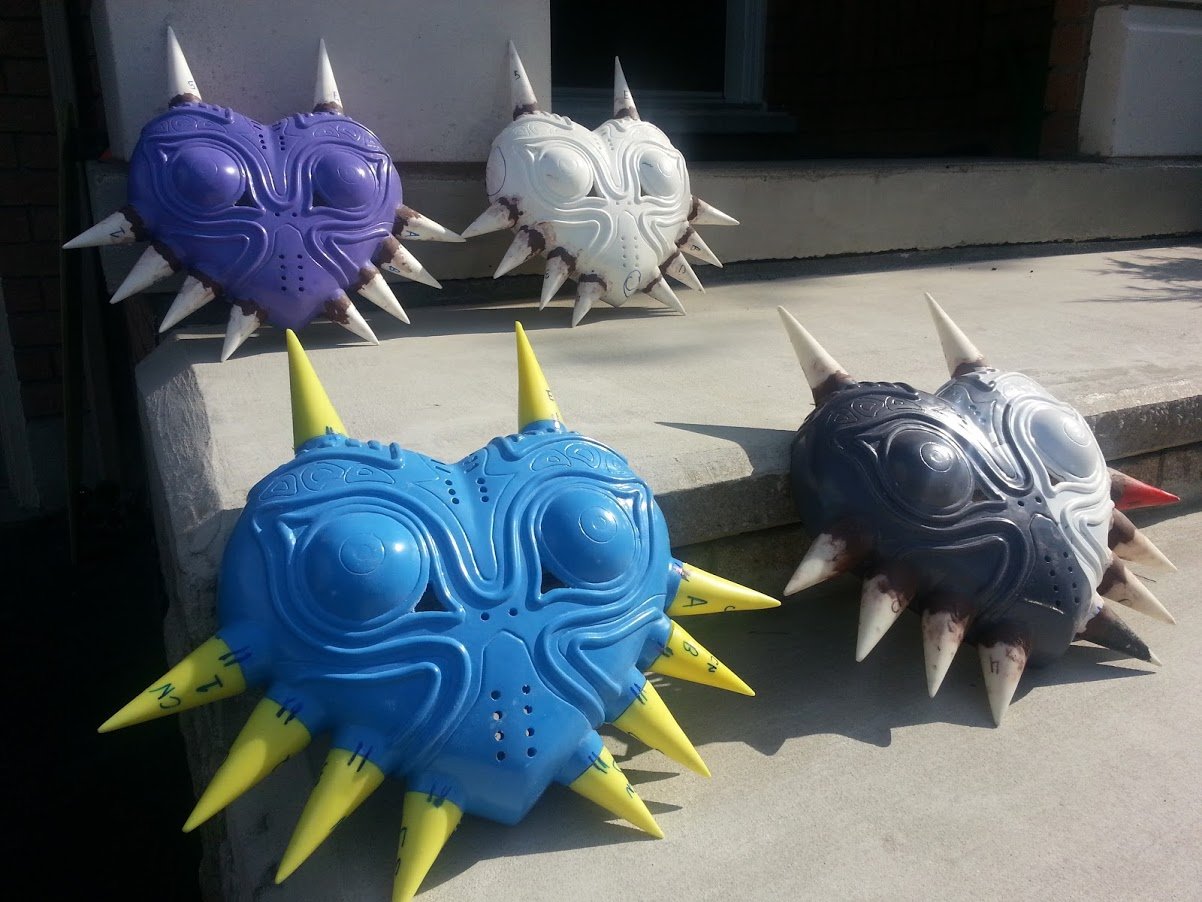
A brush-on silicone mold was created using Smooth-On Rebound 40, built up in multiple layers for strength. Silicone registration keys were added to the outside of the mold, and after applying release agent, rigid expanding Foam-iT was used to create a hard support shell. The mask shells were cast in Smooth-Cast 65D resin using a rotational casting process. Each casting was tinted for inventory tracking before final paint.
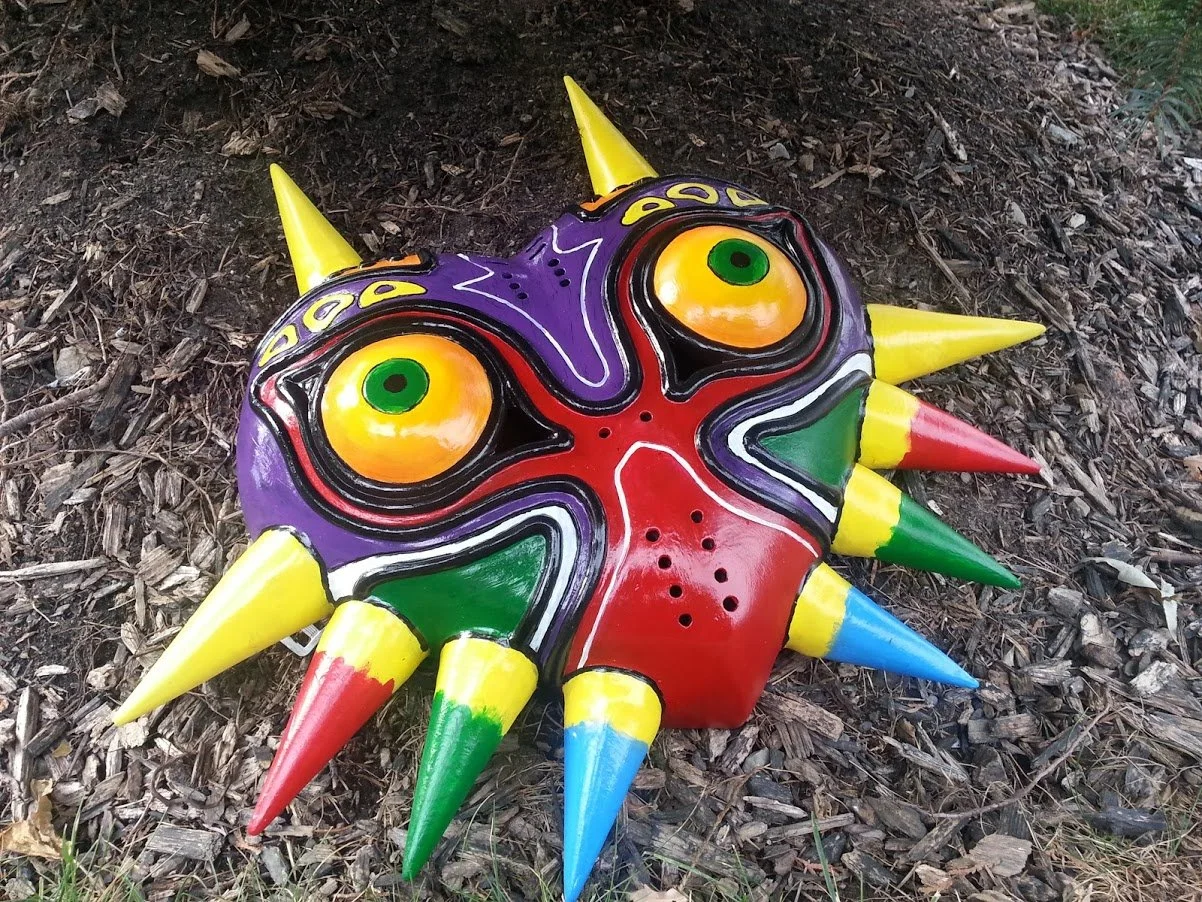
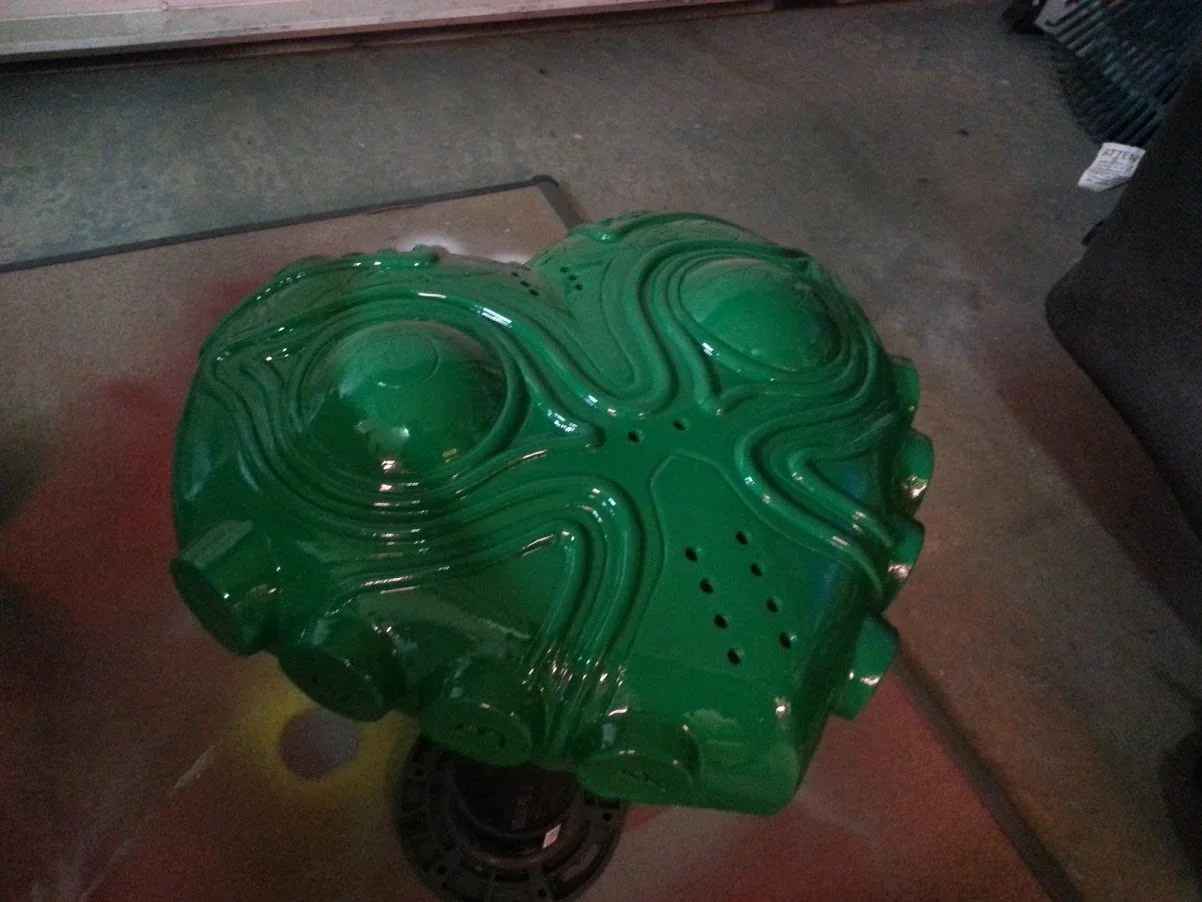
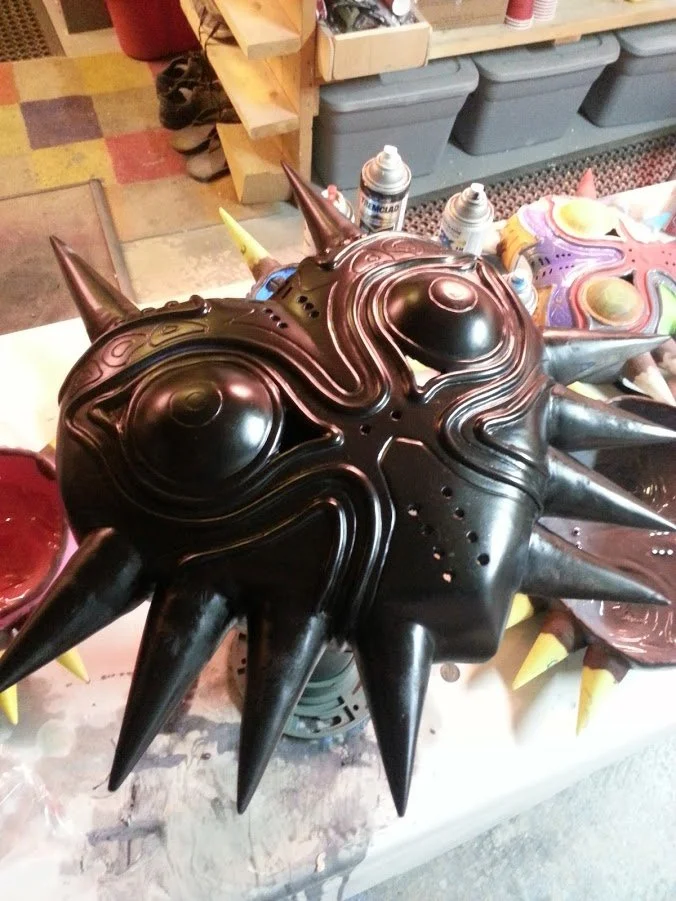
The finished masks were hand painted. Cutouts were added for breathing and viewing, and black nylon was installed behind the openings so the interior was not visible from the front. Adjustable strapping was installed using metal rivets. Wall mounts were also included with each mask.